Trusted Amazon dog finds — Save time: we pick the best, you click & shop

Puppy Crate Training Schedule

A Practical, Hour-by-Hour Plan

Key Takeaways (Quick Start)


1. Big Short, frequent cycles beat marathon lock-ins.
Use the golden loop: potty → play/train → crate nap.

2. Crate = safe, calm, rewarding.
Feed meals in the crate; toss treats before whining starts.

3. Progress, don’t rush.
Extend nap durations 5–10 minutes/day only if exits are calm and dry.

4. Consistent timing wins.
Puppies thrive on predictable rhythms more than perfect technique.

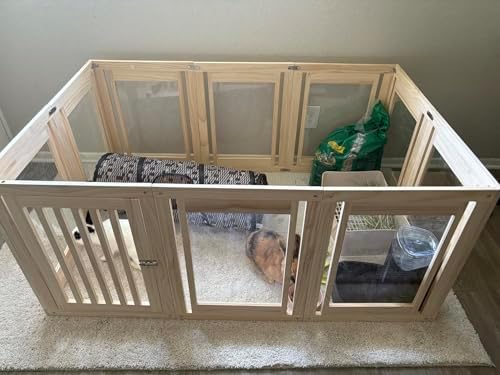
Puppy Crate Training Schedule playpen

Why Crate Training Works (Behavior Science in Plain English)

Crate training leverages classical conditioning (crate predicts calm + rewards) and operant conditioning (quiet behavior earns release). Puppies nap 14–18 hours/day; a crate protects that sleep, prevents rehearsing bad habits, and creates clean “on/off” windows for house training. When paired with enrichment before naps (sniffing, lick mats), the crate becomes a relief—not a jail.

Myth to ditch: “Crates are cruel.” Misuse is cruel. A properly sized, comfy, reward-rich crate becomes the puppy’s bedroom, not a punishment.

The Hour-by-Hour Day Plan (8–16 weeks)

Assume wake at 7:00 AM. Adjust 30–60 minutes either way for your household.

7:00 Wake → carry directly to potty spot. Say “Go potty” once. Reward within 2–3 seconds of finishing.
7:10 Breakfast in the crate (door closed only if calm).
7:20–7:40 Calm play (snuffle mat, gentle tug with rules).
7:40–8:15 Crate Nap #1 (partial cover + white noise).
8:15 Potty break → short sniff walk.
8:25–8:40 Mini-training (name, sit, hand target).
8:40–9:30 Crate Nap #2.
9:30 Potty → guarded free time (tether or small room).
10:00–10:10 Socialization micro-session (new surface, sound, room).
10:10–11:00 Crate Nap #3.
11:00 Potty → Lunch in crate (if feeding 3x/day).
11:10–11:35 Controlled play/leash practice (1–2 cues).
11:35–12:25 Crate Nap #4.
12:25 Potty → frozen lick mat (2–5 min).
12:35–1:20 Crate Nap #5.
1:20 Potty → “alone-time reps” (walk to mailbox w/o pup 1–3 min; return during silence).
1:35–2:20 Crate Nap #6.
2:20 Potty → gentle enrichment (sniff box).
2:40–3:25 Crate Nap #7.
3:25 Potty → family time (tether for supervision).
4:15 Dinner in crate.
4:25–5:10 Wind-down play (no rough zoomies).
5:10–6:00 Crate Nap #8.
6:00 Potty → Calm evening routine.
8:30–10:00 Final potty run; lights down.

Rule of thumb: Max crate time ≈ age in months + 1 hours (cap early pups to ~2–3 hrs day, longer at night).

Night Strategy (How to Reduce Whining Fast)

Pre-bed: last potty, dim lights, no big play.
Place the crate near your bed for soft monitoring.
If whining, wait 30–60 seconds; if it escalates, do a quiet potty trip only (no play), then immediately back to crate.
Most pups reduce to 0–1 night trip by 10–14 weeks with consistent days.

Weekend “Deep Practice” Template

Run three extended naps with enrichment beforehand:
Cycle 1: 60 min, Cycle 2: 75 min, Cycle 3: 90 min.
Advance only if the puppy wakes calm, crate is dry, and entry was easy.

Puppy Crate Training

Crate Size, Setup & Safety (Mistakes to Avoid)

Size: Stand/turn/lie fully extended; not cavernous. Use divider panels to grow space gradually.
Surface: Non-slip mat + washable pad.
Location: Day: near family traffic. Night: quiet corner.
Never use the crate as punishment; it must stay a safe place.
Rotate chews; no unsafe items when unsupervised.

Rewards, Cues & Timing (Conditioning Calm)

Pair entry with “Kennel” + treat tossed inside.
Mark calm with quiet praise or a dropped treat before fussing starts.
Release on silence, not barking—otherwise you reinforce noise.

Troubleshooting (Whining, Accidents, Fear)

Pair entry with “Kennel” + treat tossed inside.
Mark calm with quiet praise or a dropped treat before fussing starts.
Release on silence, not barking—otherwise you reinforce noise.

Reviews — Top 9 Crates and playpanes for Dogs


1. Premium Wire Dog Crate (Multiple Sizes) — Divider-Friendly Starter

Why it wins: Wire crates remain the most adaptable choice for house-training because you can shrink or expand the interior with a divider as your puppy grows—keeping the sleep area cozy (and clean). This pick includes the essential features most owners want: fold-flat design, removable tray, and optional double-door access—verify exact options on the listing.

Best for: Budget-friendly day-one setup; flexible for growth spurts and re-arranging rooms.

Consider if: You plan to crate near your bedside (first nights) and later in the living room.

Potential downsides: More visual stimulation vs. plastic crates; add a cover to help settle.

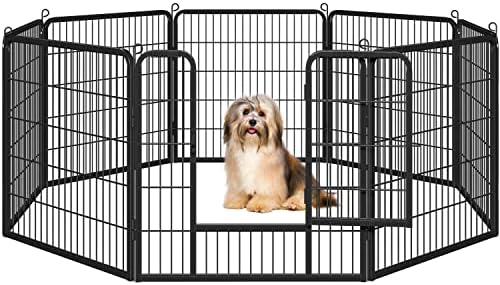
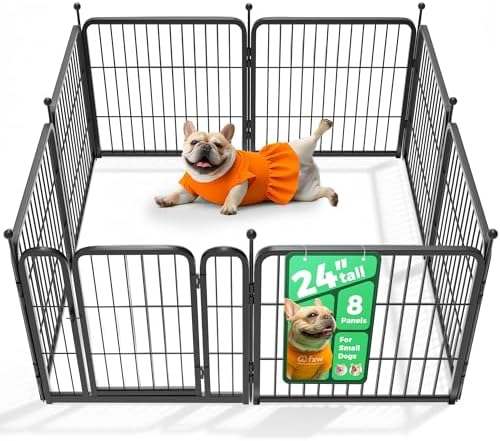
2. FXW Rollick Unleashed Dog Playpen — 24″ / 8 Panels (Editor’s Choice for Playpen Space)

Why it wins: A sturdy metal playpen that sets up in minutes and gives puppies room to move without sabotaging house rules. It’s ideal for building calm independence near you (living room/home office) and pairs perfectly with a short crate-nap rotation during the first weeks. FXW’s Rollick is a consistent bestseller with strong buyer momentum on Amazon.

Best for: Apartment corners, supervised play, “place” training, and protecting floors/wires during wake windows.

Consider if: You want to combine a crate (for naps/nights) with a safe daytime boundary.

Potential downsides: Not a travel crate; you still need a closed crate for overnights and car trips.
3. Indoor Puppy Playpen (42″ x 42″ x 25″) — Fabric With Gate

Why it wins: A soft, zipper-door enclosure that’s gentle on tiny paws and great for quiet time beside your desk. The 42” x 42” footprint is roomy enough for a bed, water, and chew without turning into a potty zone when you’re following tight outing schedules.

Best for: Very young puppies, toy breeds, and supervised indoor use.

Consider if: You want something lightweight that collapses quickly and can move room-to-room.

Potential downsides: Fabric walls aren’t chew-proof; not for unsupervised Houdinis.

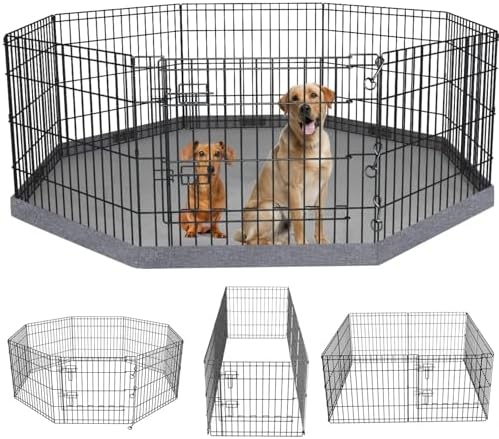
4. PETIME Foldable Metal Exercise Pen — 8 Panels, 24″ H (Value Metal Pen)

Why it wins: Eight configurable metal panels you can shape into a square, rectangle, or L to fit your space. Great for zone training (bed + water + chew) while you build crate stamina. Includes versions with bottom/top covers to protect floors and deter climbers.

Best for: Owners who want modular layouts and easy fold-flat storage.

Consider if: You need bottom pad protection for hardwood or rental floors.

Potential downsides: Panels are 24” high—athletic pups may outgrow the height.
5. K9 Ballistics Tough Orthopedic (Chew-Resistant Cover)

Highlights: Rugged ballistic/ripstop cover stands up to digging and nesting better than most budget fabrics. Certain models qualify for the 120-day Chew Proof Warranty™ (one-time replacement). 

Best for: Persistent scratchers/diggers; light to moderate chewers.

Watch-outs: “Chew-resistant” ≠ “chew-proof” for every dog; foam density undisclosed.

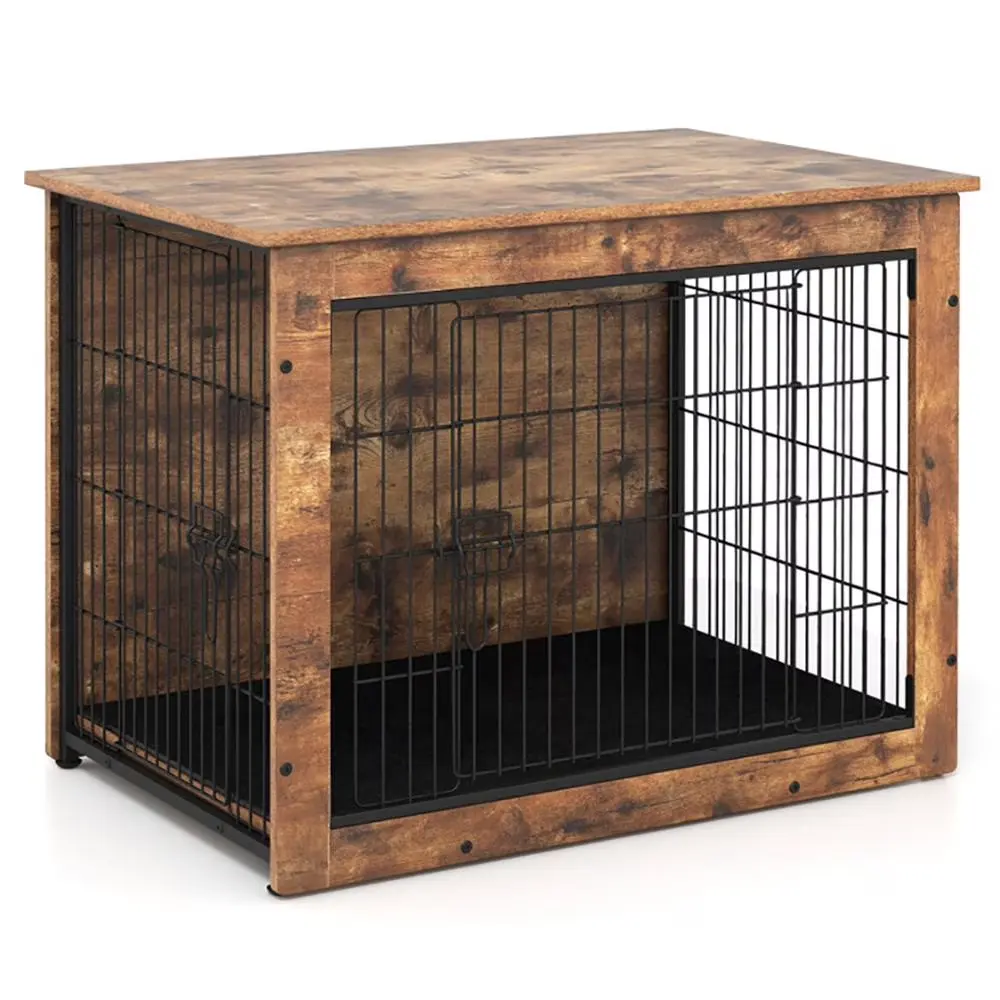
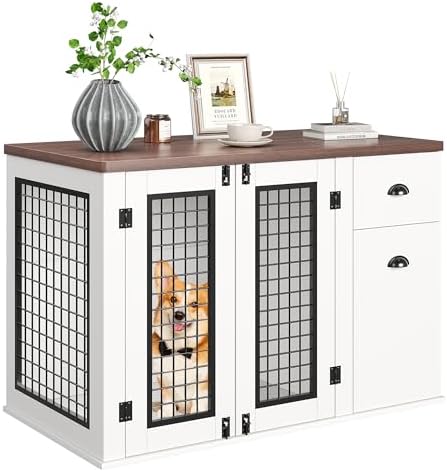
6. Furniture-Style Dog Crate (Credenza Style, up to ~60 lb — model varies by listing)

Why it wins: A dual-purpose crate that doubles as an end table/console, giving you permanent living-room placement (huge for consistency in training). The listing highlights spacious dimensions for small-to-medium dogs and integrated storage—use it to stash treats, chew toys, and spare bedding so your routine stays friction-free.

Best for: Design-conscious homes; owners who want the crate to blend in rather than get tucked away.

Consider if: You’re committed to measuring your pup carefully and reviewing the weight limit on the product page.

Potential downsides: Heavier; assembly required; not the right pick for heavy chewers.
7. Petmate Pet Porter — 24″ Hard-Sided Crate (Made in USA)

Why it wins: Classic, airline-style crate that’s durable, secure, and easy to wipe down—excellent for car training and for pups who settle better in a cozier, lower-stimulus den. The 24″ size targets small pups up to roughly 20 lb (always check dimensions and weight guidance).

Best for: Car safety acclimation; puppies who relax with less visual input.

Consider if: You need solid sides for nervous or easily distracted pups.

Potential downsides: Heavier than wire; less adjustable airflow vs. open mesh.

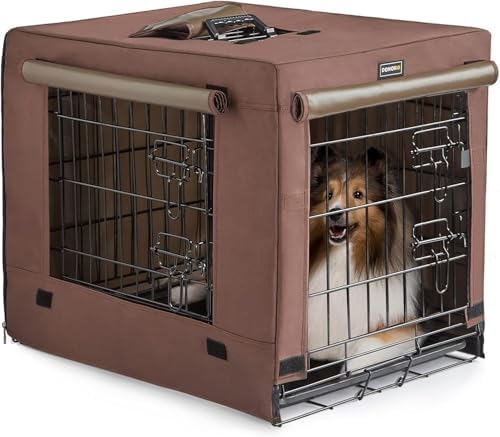
8. Deekuiwi 30″ Collapsible 4-Door Soft Crate (Travel-Friendly)

Why it wins: A soft-sided, multi-door travel crate that folds flat, adds mesh windows for airflow, and includes a carrying bag—perfect for hotel overnights, road trips, or setting up a quiet retreat in relatives’ homes.

Best for: Pups who are already crate-cozy and need a portable den.

Consider if: You want a lighter solution than hard plastic or wire for the car (still secure the crate).

Potential downsides: Not for heavy chewers; soft crates require crate-trained pups.

9. MidWest iCrate Starter Kit (24″) — Crate + Bed + Cover + 2 Bowls (All-in-One)

Why it wins: A rare bundle that includes the wire crate, a fitted bed, privacy cover, and clip-on bowls—exactly what beginners need to create a calming sleep routine with consistent cues (cover down = nap/night). Great value if you don’t want to source pieces separately.

Best for: First-time puppy owners who want one box to start the routine tonight.

Consider if: You like the flexibility of wire (visibility + airflow) with a cover to reduce stimulation.

Potential downsides: The included bed is starter-grade—upgrade to thicker foam as your pup grows.

Sample Schedules by Age

8–10 weeks: Awake 45–60 min; naps 45–60 min; night 1–2 potty trips.
10–14 weeks: Awake 60–90 min; naps 60–90 min; night 0–1 trip.
14–20 weeks: Awake 90–120 min; naps 90+; most sleep through the night.

FAQs

How long can a puppy stay in the crate during the day?

Use the rule of thumb age in months + 1 hour (max ~3–4 hours for very young pups).
Details: For 8–10-week puppies, plan 45–60-minute awake windows followed by 45–60-minute crate naps. Between cycles: potty → play/train → crate. Daytime limits keep bladders comfortable and prevent crate aversion. Need a flexible setup for awake time? Pair your crate with a safe playpen so your puppy can explore without accidents.

What’s the ideal puppy crate schedule at night?

Most pups do best with a pre-bed potty, lights down, crate near your bed, and 0–2 night potty trips depending on age.
Details:
8–10 weeks: One or two quick potty breaks.
10–14 weeks: Usually one, sometimes none.
14–20 weeks: Many sleep through the night.
Keep the routine boring: out → potty → back to crate. No play, no chatter—this preserves sleep associations.

My puppy cries in the crate—do I ignore it?

Pause 30–60 seconds. If crying escalates, do a silent potty break only, then back to the crate.
Details: Reward quiet moments, not noise. Add a short sniff/lick task (snuffle mat, frozen lick mat) before naps to lower arousal. If protests happen right at entry, shorten the previous awake window and try a calmer lead-in. A crate cover can reduce visual triggers for alert puppies.

Crate vs playpen—do I need both?

Yes, ideally both.
Details: Use the crate for sleep (naps/nights) and the playpen for safe awake time near you. This combo prevents free-roaming potty accidents, protects cords and shoes, and lets you practice calm independence while you work. It also makes your hour-by-hour schedule easier to stick to.

More Recommendations

Join Our Dog-Loving Community

Your go-to source for curated Amazon dog products — from toys and gear to apparel and more. We help you find the best for your best friend.

Follow us!

Copyright © 2023 jackstore.fun | Powered by Creative Minds.

Scroll to Top