Jack Store blog · Health & Grooming
Why Does My Dog's Breath Smell? Causes, Fixes and When to Call the Vet
Last updated:
As an Amazon Associate we earn from qualifying purchases.
Why does my dog’s breath smell? In most dogs the answer is in the mouth: plaque bacteria at the gumline and the gum disease they cause. The American Animal Hospital Association (AAHA) calls bad breath often the first sign of dental disease, and says most dogs already have some form of periodontal disease by age three. It is common, it is not something to shrug off, and left alone it can progress.
A smaller share of bad breath comes from what a dog eats, and a few distinct smells can point to illness elsewhere in the body. Below: the causes, what different smells can mean, a table of signs matched to how fast the sources say to act, what helps at home and what only a veterinarian can fix. This is general information, not a diagnosis.
In this guide
- The most common cause: plaque and gum disease
- What the smell can tell you
- When to call the vet: signs and how fast to act
- Is it the teeth, or something the dog ate?
- What you can do at home
- Dental chews, water additives and the VOHC seal
- What the vet does that you cannot
- Small dogs and older dogs: who gets it more
- The honest catch
- Frequently asked questions
The most common cause: plaque and gum disease
Plaque is a buildup of bacteria at the gumline. The Merck Veterinary Manual explains where the smell comes from: as the bacteria below the gumline multiply, their waste products, hydrogen sulfide and ammonia among them, accumulate and damage tissue.
Merck describes two forms of gum disease. In gingivitis, the gums change from coral-pink to red or purple, swell at the edge and tend to bleed on contact; bad breath is common, and it can be reversed with proper tooth cleaning. In periodontitis, the damage reaches the ligaments and bone, and it is irreversible. Merck notes that gingivitis is often first noticed at about 2 years of age and that periodontitis usually begins at 4 to 6 years.
The trap is that the mouth can look fine. The American Veterinary Medical Association (AVMA) notes that most dental disease occurs below the gum line, where you cannot see it, and AAHA adds that many pets show no signs because they are experts at hiding pain. Breath is often the only early clue you get.
What the smell can tell you
Different causes tend to smell different. The table collects what the sources say each pattern can point to. A smell is a reason to look closer, never a diagnosis; only a veterinary exam can tell these apart.
The first row accounts for most smelly mouths. On the rest, the AKC is direct: diabetes, kidney disease and liver disease all require treatment from a veterinarian, and once the underlying issue is resolved, the bad breath should go away too.
| What you smell | What it can point to | Source |
|---|---|---|
| Foul, there every day, slowly getting worse | Poor oral hygiene and periodontal disease, the most common causes | AKC, Merck |
| Like garbage or feces, comes and goes | Diet habits: the trash, the cat’s litter box or eating stool | AKC |
| Sweet or fruity | A symptom of diabetes | AKC |
| Like urine | A warning sign of kidney disease | AKC |
| Truly foul, with vomiting, lack of appetite and yellow-tinged gums | Possible liver disease | AKC |
| Bad breath with facial swelling | Dental disease that has progressed; a tooth root abscess can rupture and drain through the face or jaw | AAHA |
When to call the vet: signs and how fast to act
The left column is what you notice; the middle column is how fast to act, in the source’s own words. Where a source sets no clock, we have not invented one: call the clinic, describe what you see and let them set the timing.
Two cautions from the AVMA for when you look in the mouth yourself. Nonspecific changes such as irritability can also result from oral disease. And a pet in pain may bite, so lift the lip gently and stop if your dog objects.
| What you notice | How fast | Source and reason |
|---|---|---|
| Foul breath with vomiting, lack of appetite and a yellow tinge to the gums | Veterinarian or emergency clinic as soon as possible | AKC: possible liver disease |
| Sweet or fruity breath in a dog that is also lethargic, weak, eating less or having trouble breathing | Seen by a veterinarian right away | AKC for the smell; Merck lists these as signs of diabetic ketoacidosis, a medical emergency |
| Sweet or fruity breath, dog otherwise acting normal | Make an appointment; mention any extra drinking and urination | AKC: a symptom of diabetes |
| Breath that smells like urine | A visit to your veterinarian | AKC: a warning sign of kidney disease |
| Bleeding from the mouth, swelling around the mouth, broken or loose teeth, dropping food, drooling or reduced appetite | Contact your veterinarian | AVMA: signs of oral health problems |
| Bad breath with red gums or discolored teeth | Schedule a dental exam | AAHA: signs of dental disease |
| No signs at all | A dental check at least once a year | AVMA |
Is it the teeth, or something the dog ate?
Breath that turned bad overnight and smells like the trash can usually has a simple story. The AKC lists the usual suspects: garbage, decomposing things found outdoors, the cat’s litter box and coprophagia, the habit of eating stool.
The fixes are management, not medicine. The AKC’s are to secure the trash, put the litter box out of reach and clean up right after your dog. Our rule of thumb, not a clinical one: if the smell is still there a few days after the snacking stops, treat it as a mouth problem and go back to the table above.
What you can do at home
For breath that comes from plaque, the home fix is mechanical. The AVMA calls regular brushing the single most effective action you can take to keep your pet’s teeth healthy: daily is best, and several times a week can also be effective. Our guide to brushing your dog’s teeth has the seven-step routine and a five-day on-ramp for dogs that resist.
One limit before you start. Merck’s treatment for gingivitis is a thorough professional cleaning, below the gum line included; home brushing is what keeps it from coming back. If the gums are already red or bleed when touched, AAHA’s advice for red gums is to schedule a dental exam. Our reading: do that first, and build the brushing habit once the vet has seen the mouth.
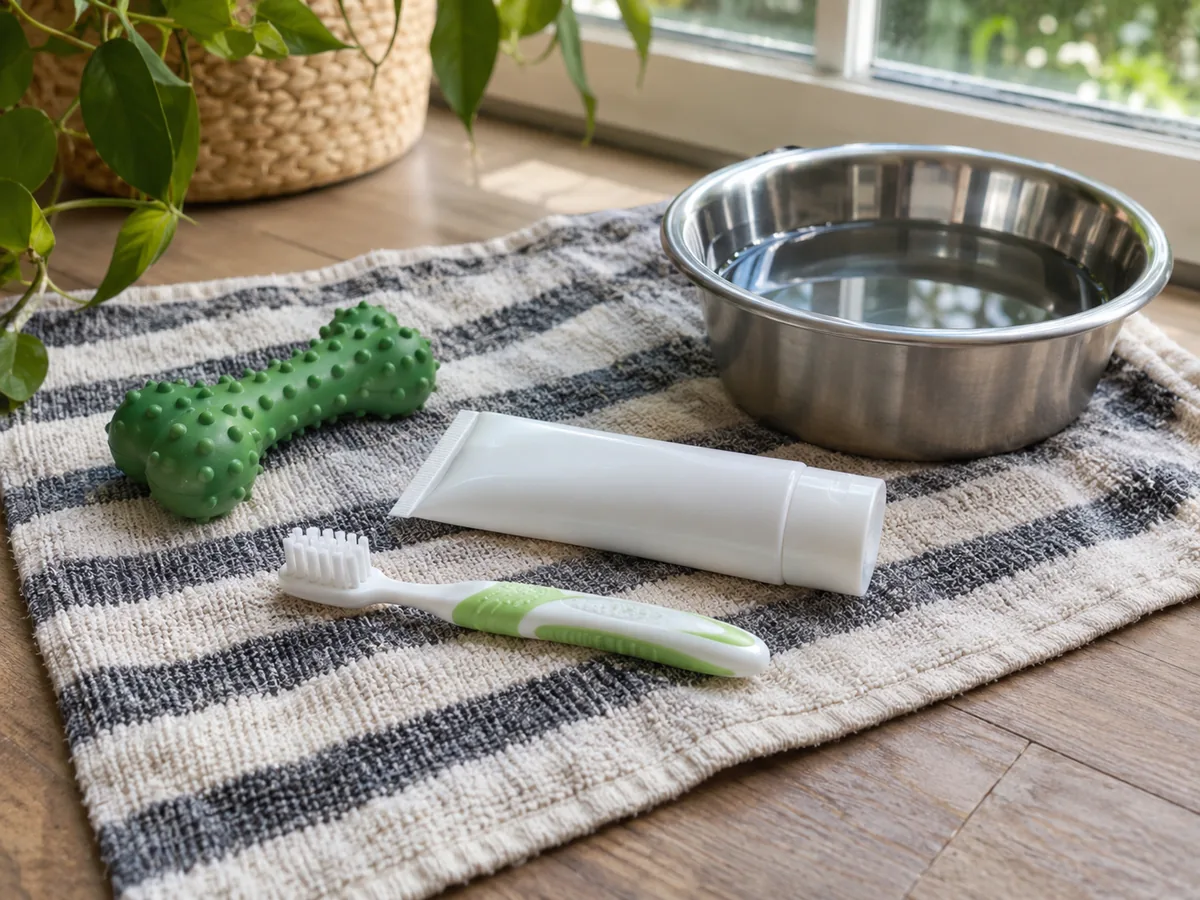
- Brush the outer surfaces along the gumline. Merck says only the outside surface of the teeth needs to be brushed or wiped.
- Use a toothpaste made for dogs. Merck says toothpastes made for people should not be used; the AKC notes they may contain xylitol, which is toxic to dogs.
- If your dog will not allow a brush, Merck says wiping the teeth with gauze at least every 2 to 3 days can remove plaque.
- Lock up the trash and the litter box if the smell tracks with scavenging.
- Do not cover it up. A minty treat changes the smell, not the cause.
Dental chews, water additives and the VOHC seal
Products can help, with two filters. The first is evidence. The AVMA warns that many products claim to improve dental health, but not all of them are effective. The shortcut is the seal of the Veterinary Oral Health Council (VOHC). The council does not test products itself. It evaluates the data a company submits and awards its Seal of Acceptance, for plaque, for calculus (tartar) or for both, when the product meets its standards.
The second filter is realism. In the VOHC’s own words, the gold standard is brushing, and daily chewing can also be effective. AAHA says chewing can help remove some plaque and that water additives can help reduce plaque accumulation. Some, not all. A chew such as the WHIMZEES Brushzees in our catalog is a backup for the days brushing does not happen, and the other add-ons we would pick are on our Health and Grooming page.
Two safety notes. The VOHC names two ways to reduce the risk of a chew causing an obstruction: give the right-sized product for the dog’s body weight, and only when you are there to watch the dog chew it. And skip the very hard objects. Merck lists real bones, hooves, antlers and hard nylon toys among the things that fracture teeth.
What the vet does that you cannot
If the smell comes from established dental disease, the fix is a professional cleaning. AAHA lists the steps: a conscious oral exam, blood work, anesthesia, dental X-rays, scaling above and below the gumline, polishing and probing around each tooth, with extractions where needed. The X-rays matter because, as AAHA puts it, more than 50% of a tooth’s structure is below the gumline.
Anesthesia is the part people worry about. The AVMA’s position is that it will always have risks, but that the benefits of using it for dentistry far outweigh them. AAHA is firm about the alternative: non-anesthetic cleanings may make teeth look and smell better in the short term, but they remove only visible tartar above the gumline and create a false sense of security.
How often? AAHA says most pets need a professional dental cleaning every 1-2 years, and that small dogs and certain breeds may need them more frequently. Your veterinarian sets the schedule.
Small dogs and older dogs: who gets it more
Size and age shift the odds. Merck states that small-breed dogs usually have more problems with periodontitis than large-breed dogs, and the AKC gives one reason: smaller breeds tend to have teeth that are closer together, which promotes plaque and tartar buildup.
Age pushes the same way, since Merck describes periodontitis as usually appearing after years of plaque, tartar and gingivitis. If you live with a small dog past its second birthday, bad breath is a reason to look in the mouth.
Frequently asked questions
Is bad breath normal in dogs?
Common, but not normal. The AKC notes that owners tend to dismiss it as just dog breath when there is usually a very good reason behind the odor, and AAHA calls bad breath often the first sign of dental disease. Most dogs have some form of periodontal disease by age three, so a smelly mouth is worth an exam.
Why does my dog's breath smell sweet or fruity?
The AKC says sweet, fruity breath is a symptom of diabetes and a reason to make a veterinary appointment, more so alongside extra drinking and urination. If the dog is also lethargic, weak, eating less or having trouble breathing, Merck lists those as signs of diabetic ketoacidosis, a medical emergency: see a veterinarian right away.
Can I use human toothpaste on my dog?
No. The Merck Veterinary Manual says toothpastes made for people should not be used, AAHA warns that human toothpaste is often toxic to pets, and the AKC points to xylitol as one ingredient that is toxic to dogs. Use a toothpaste made for pets, in a flavor your dog accepts, with a soft-bristled brush.
Do dental chews get rid of bad breath?
They can help, and they do not replace brushing. AAHA says chewing can help remove some plaque and recommends chews with the VOHC seal, and the VOHC itself calls brushing the gold standard. If the breath comes from established gum disease, no chew will fix it; that takes a professional cleaning by your veterinarian.
Sources
- AVMA: Pet Dental Care (client brochure, PDF)
- AAHA: Dog and Cat Dental Disease, Signs, Professional Cleanings, Anesthesia and Home Care
- Merck Veterinary Manual: Dental Disorders of Dogs
- Merck Veterinary Manual: Disorders of the Pancreas in Dogs (diabetes mellitus)
- VOHC: Veterinary Oral Health Council
- AKC: Why Does My Dog's Breath Stink? Possible Reasons for Bad Breath
Nothing on this site is veterinary advice. Health claims belong to the manufacturer; your vet knows your dog.

By Jack ReyesJack Reyes writes and edits the guides and picks on jackstore.fun, and reads the fine print on dog gear so you do not have to: how a thing works, who it is for and who should skip it. Jack Reyes does not test products and never quotes prices. The other Jack, the Maltipoo on our logo, is the site mascot.