
Walk & Training
A walk is the one thing you do with your dog every single day, and it is where most of the friction lives: the pull that hurts your shoulder, the harness that gaps at the neck, the gate that was open for thirty seconds. This silo collects the gear that solves those exact problems, from front-clip harnesses that turn a lunge into a sideways turn to GPS trackers that put a dot on a map when the dot matters.
As an Amazon Associate we earn from qualifying purchases.
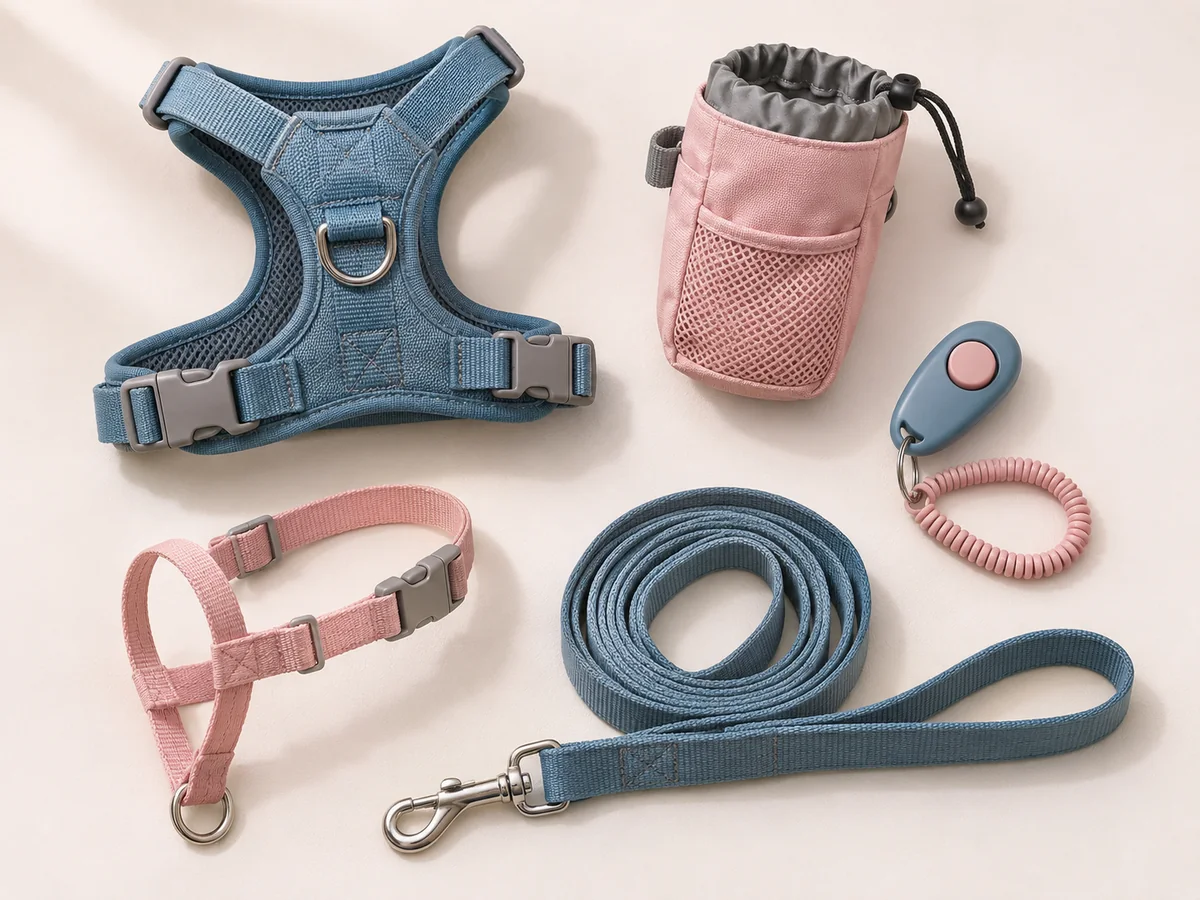
We sort it the way an owner shops: harnesses first, because a well-fitted no-pull harness changes tomorrow's walk; then GPS collars and trackers, which are an insurance policy you hope never to use; and finally the training guides, crate and potty schedules included, because gear only works when the routine behind it does.
Every pick on this page says why we chose it, who it is for and who should skip it. We do not test products and we never quote prices. What we do is read the listing, understand the mechanism and tell you what to check before you order, like chest girth, clip position and whether a tracker needs a plan.
If you are new here, start with the harness guide and the fit checklist, then come back for the tracker comparison. If you have a puppy, the crate and potty schedules are the two pages that will save your floors.
Picks in Walk & Training
Harnesses and leashes
 Walk & Training
PetSafe Easy Walk Comfort harness
A front-clip harness that turns a lunge into a sideways turn. The padded chest piece and five adjustment points let you dial the fit so the clip sits where it should.
See it on AmazonRead why we picked it →- Walk & Training
Blue-9 Balance harness
A Y-front harness with six points of adjustment and two leash rings. It is designed so nothing crosses the shoulder joint, which keeps the stride free while you still get a front clip.
See it on AmazonRead why we picked it → - Walk & Training
2 Hounds Design Freedom no-pull harness
A dual-connection harness: a front ring to redirect and a back loop that tightens gently when the dog pulls. The matching leash clips to both at once.
See it on AmazonRead why we picked it → - Walk & Training
PetSafe 3-in-1 harness
A padded harness with a front ring for training, a back ring for everyday walks and a seat-belt loop for the car. Three jobs, one piece of nylon.
See it on AmazonRead why we picked it → - Walk & Training
Wild One Harness 2.0
A low-profile harness in the Small size with a front D-ring, built for small dogs and city walks. It redirects a small puller without burying the dog in straps.
See it on AmazonRead why we picked it → - Walk & Training
Ruffwear Front Range harness and leash
A padded, reflective harness with a front ring and a back ring, bundled with a 5-foot leash with a padded handle. Made for daily walks that run long.
See it on AmazonRead why we picked it → - Walk & Training
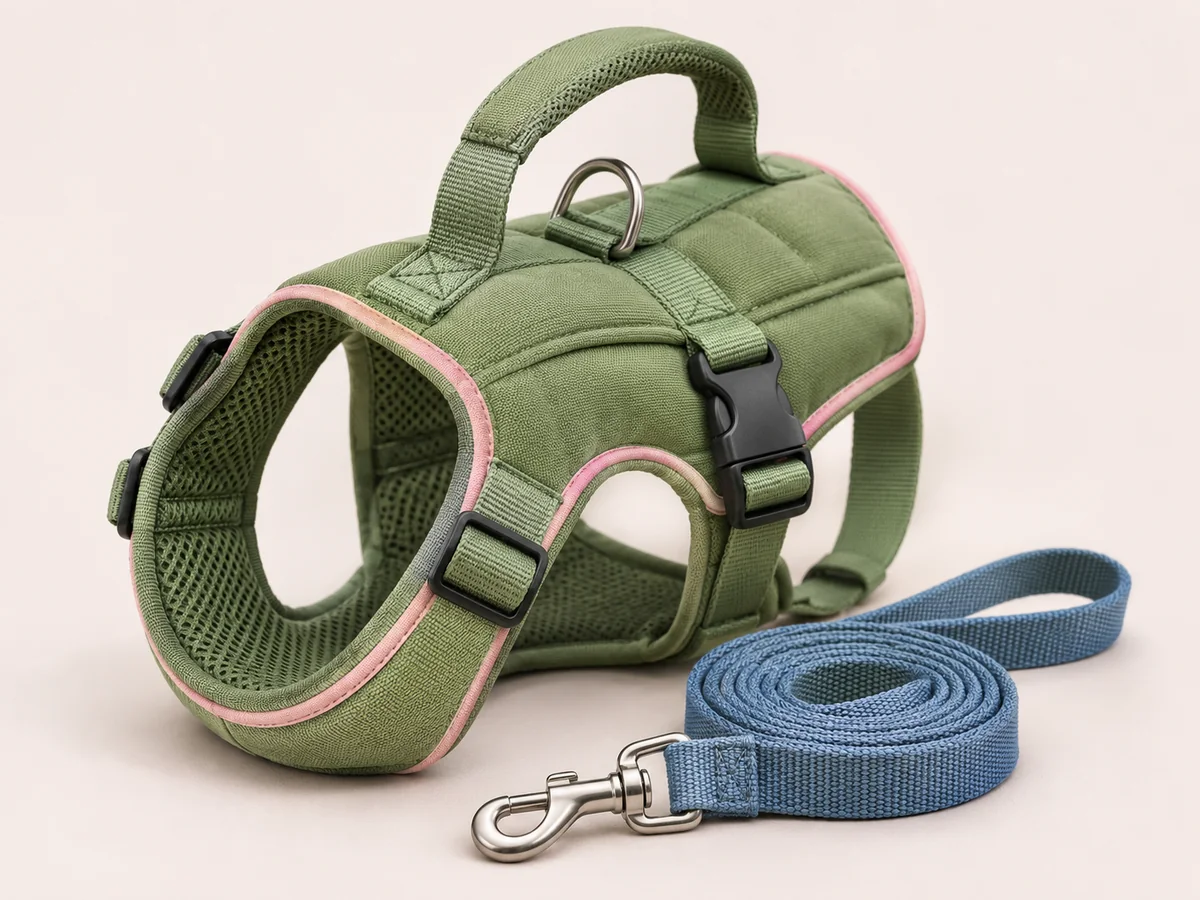
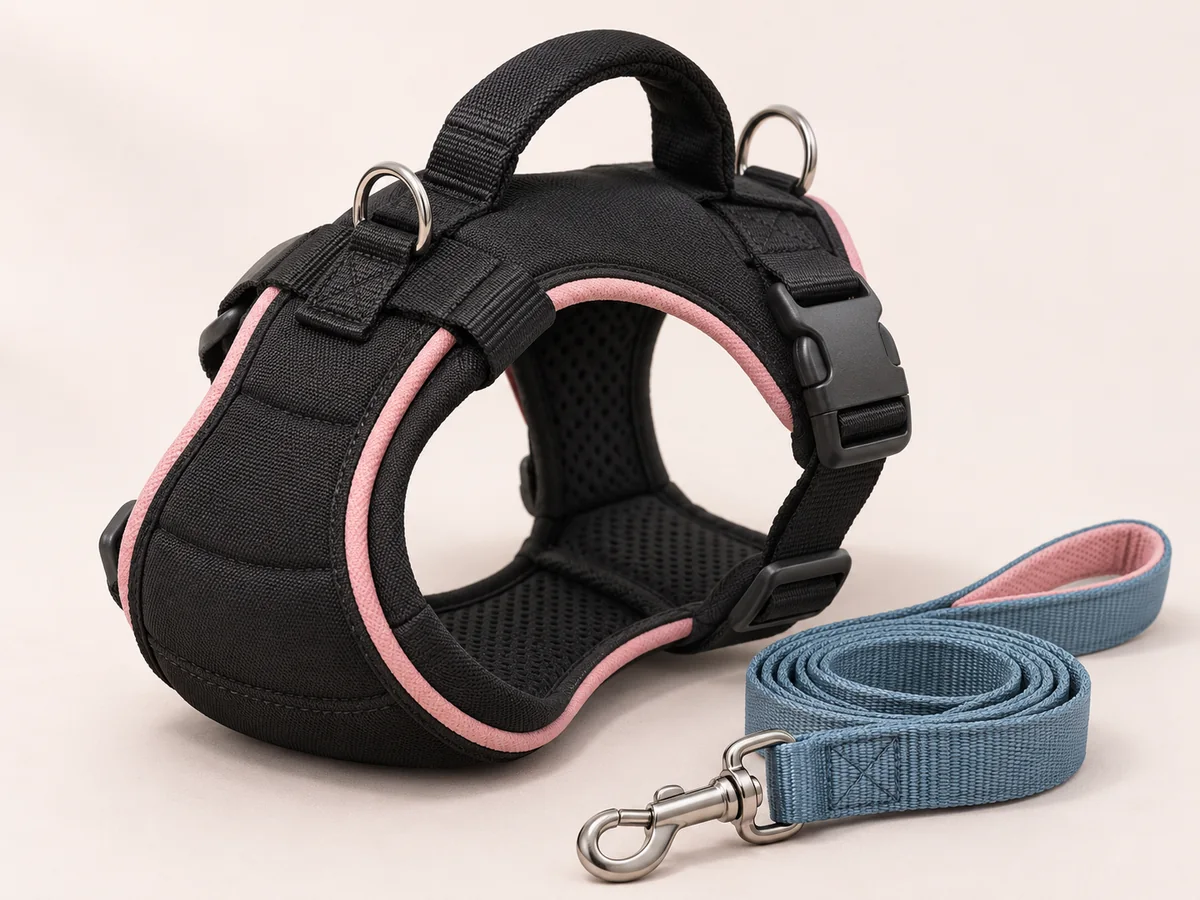
PoyPet no-pull harness and leash set
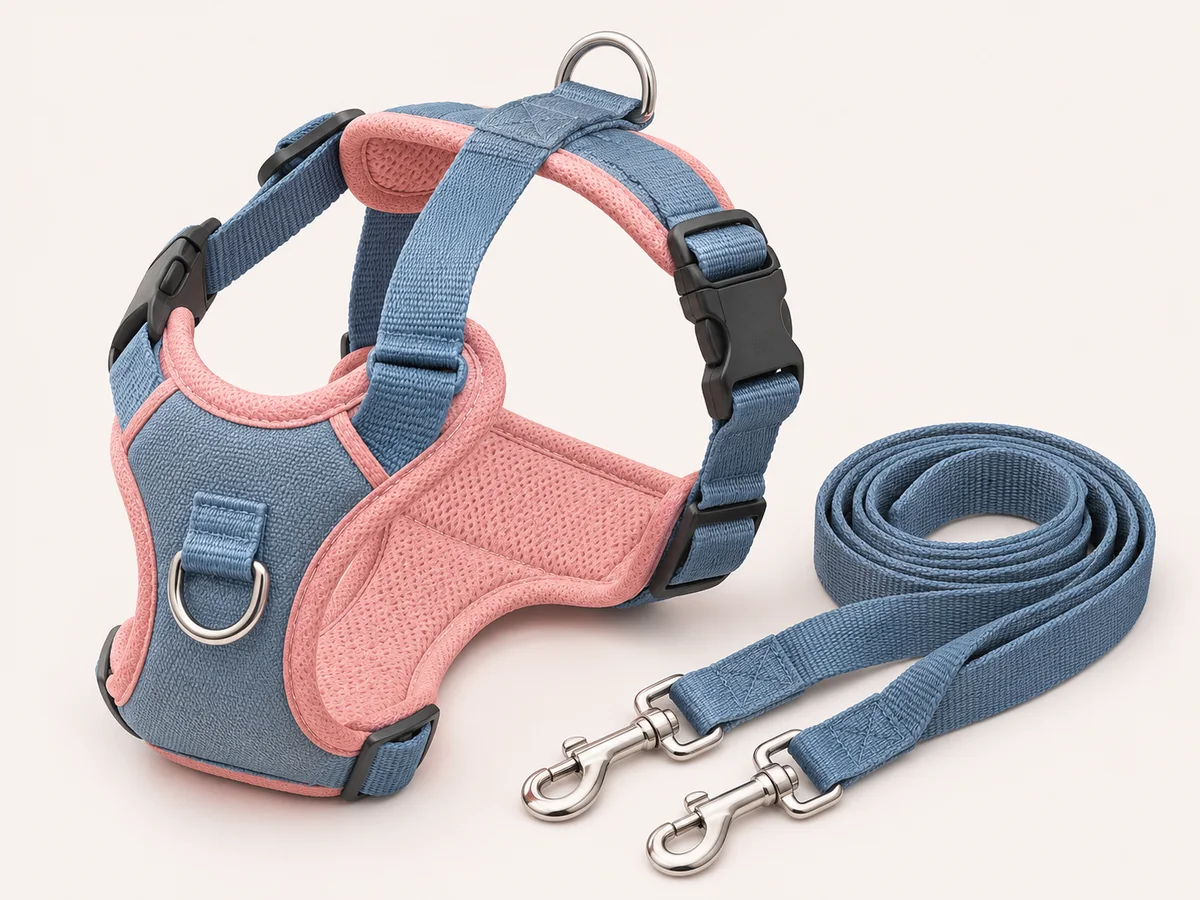
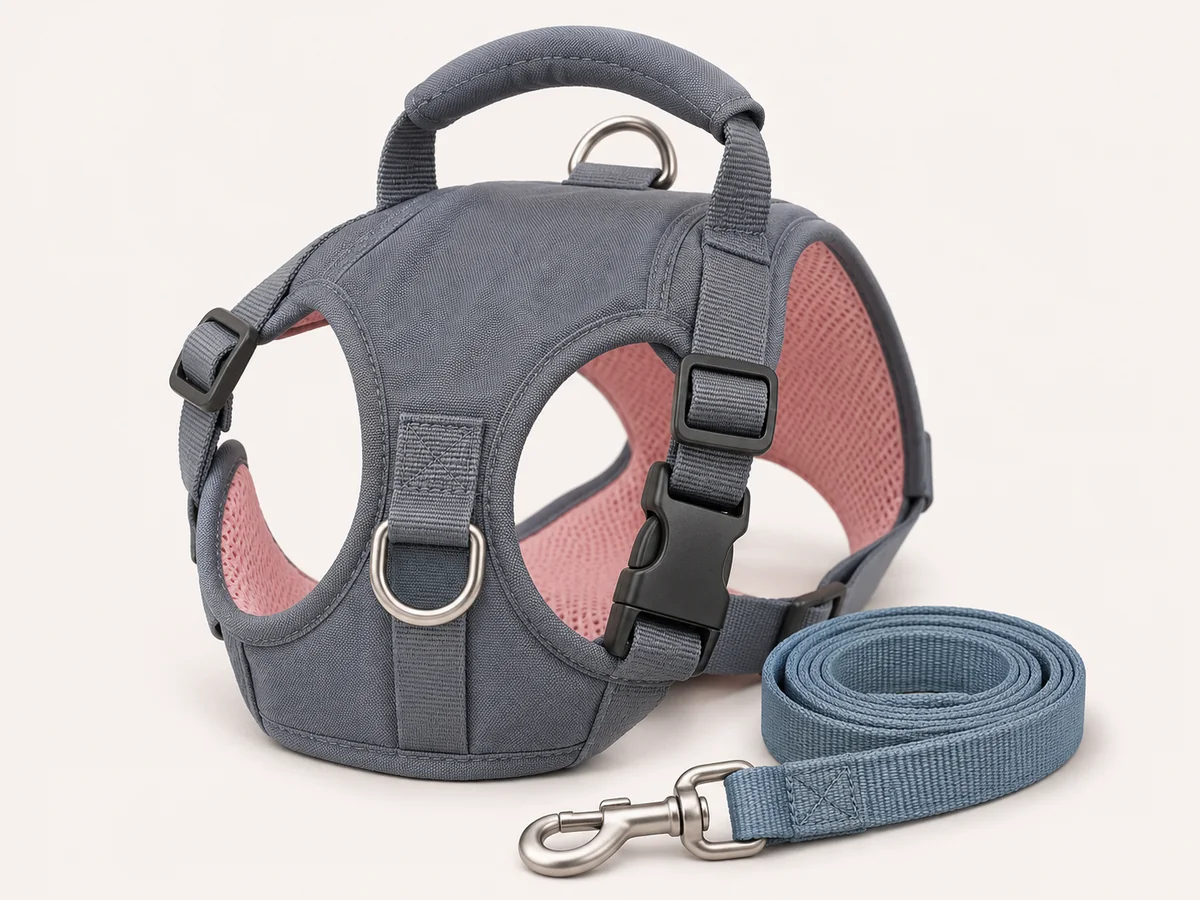
A padded vest harness with two D-rings and a top handle for quick control, sold with a 5-foot leash. The neck buckle means nothing goes over the head.
See it on AmazonRead why we picked it → - Walk & Training
Huntboo escape-proof harness
A no-slip harness with an extra strap behind the ribs, so a dog that backs up stays in. Seven adjustment points and full reflective trim.
See it on AmazonRead why we picked it → - Walk & Training
Non-stop dogwear Rock harness
A harness built for the outdoors, with three leash attachment points, a handle on top and reflective trim. This listing is the medium size.
See it on AmazonRead why we picked it → - Walk & Training
Red Dingo Classic harness
A plain, lightweight harness with adjustable straps, in a 15 mm small size. It keeps leash pressure off a puppy neck while leash manners are still forming.
See it on AmazonRead why we picked it → - Walk & Training
rabbitgoo no-pull harness with handle
A padded vest harness for large dogs with a front clip for redirecting, a back clip for everyday walks and a handle on top. Reflective, no-choke design.
See it on AmazonRead why we picked it → - Walk & Training
Embark Adventure harness
A nylon harness for medium dogs with a front clip to curb pulling, reflective trim and a gel-lined top handle that is comfortable to grip.
See it on AmazonRead why we picked it → - Walk & Training
Heavy-duty tactical harness for large dogs
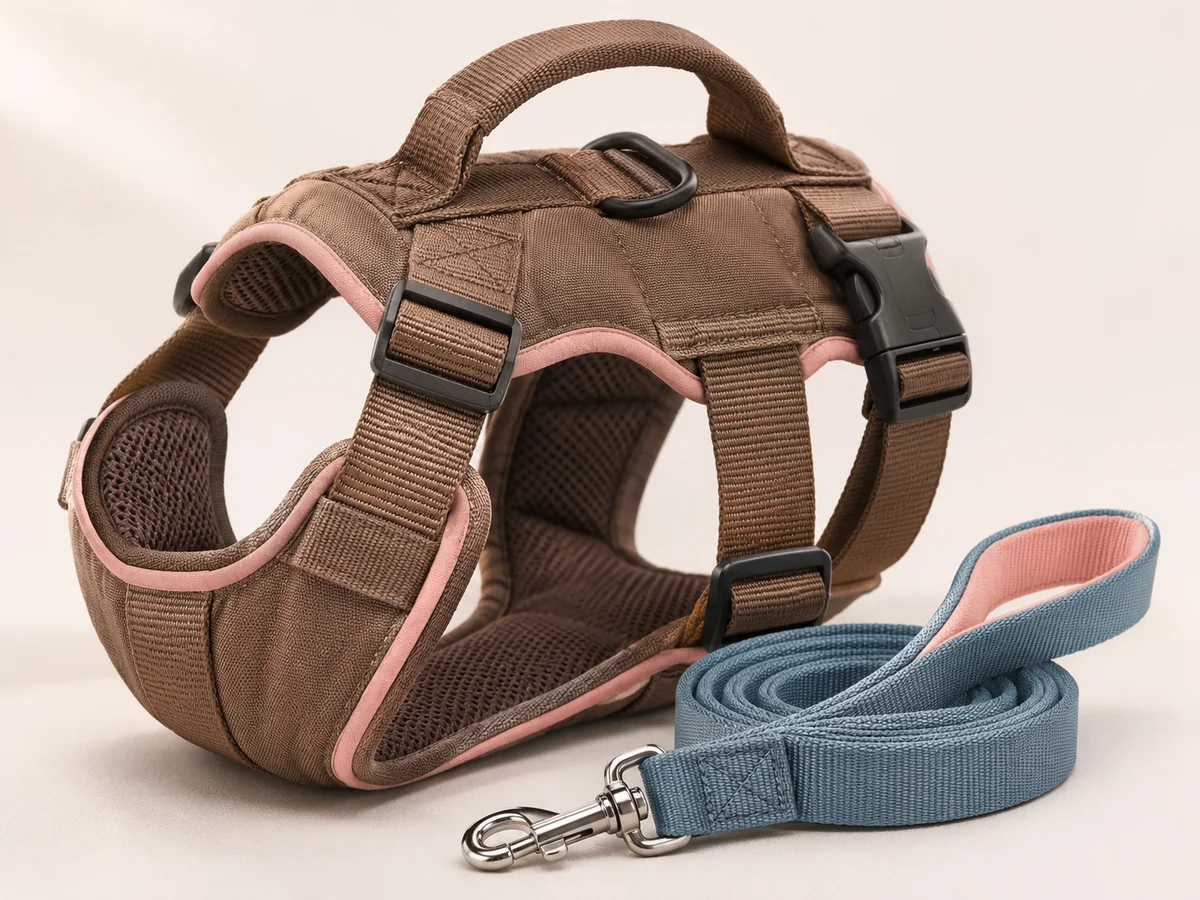
A heavy-duty vest harness in the tactical style, for large and extra-large dogs. It has a control handle, reflective details and wide adjustable straps.
See it on AmazonRead why we picked it → - Walk & Training
GAMUDA step-in linen harness, collar and leash set
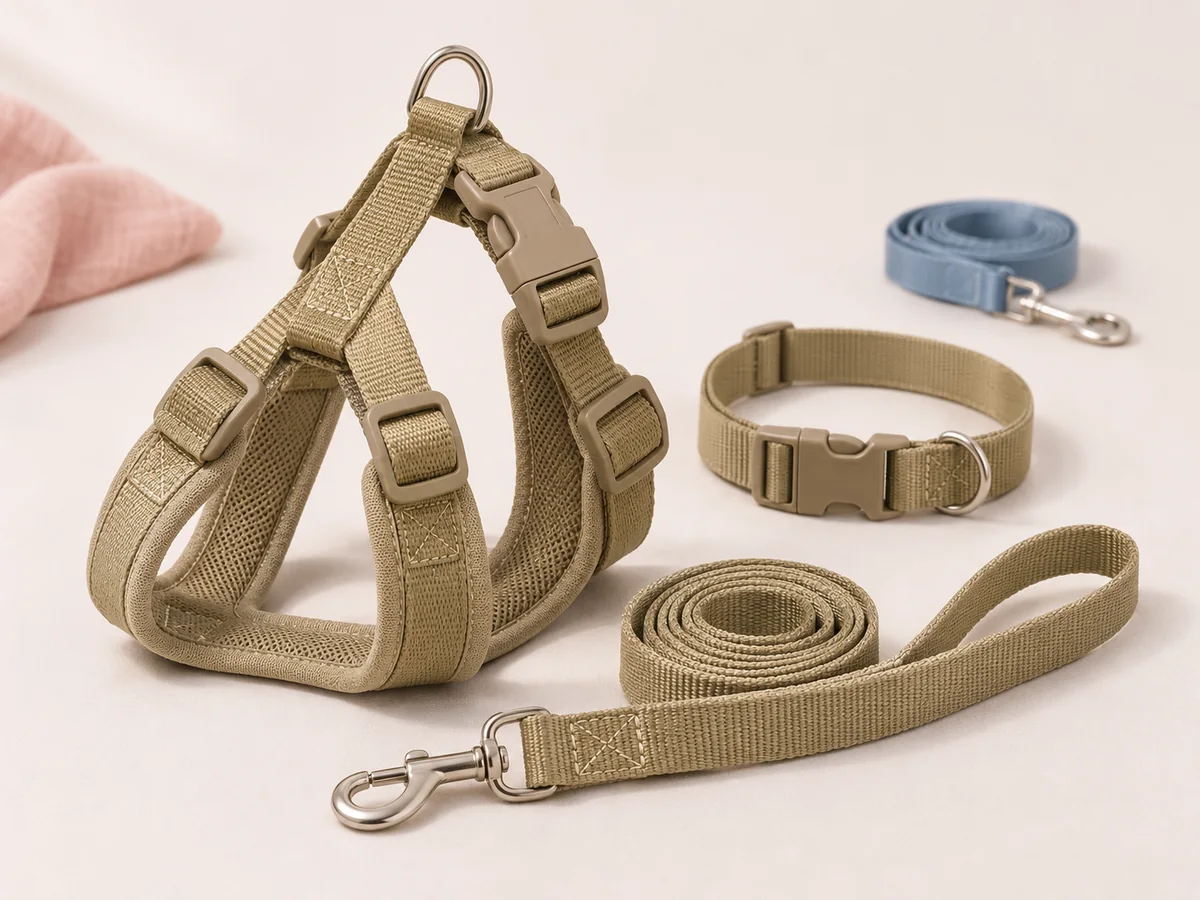
A step-in harness with a matching collar and leash, in a khaki linen-look fabric for small pets. The dog steps into it and you buckle on the back.
See it on AmazonRead why we picked it → - Walk & Training
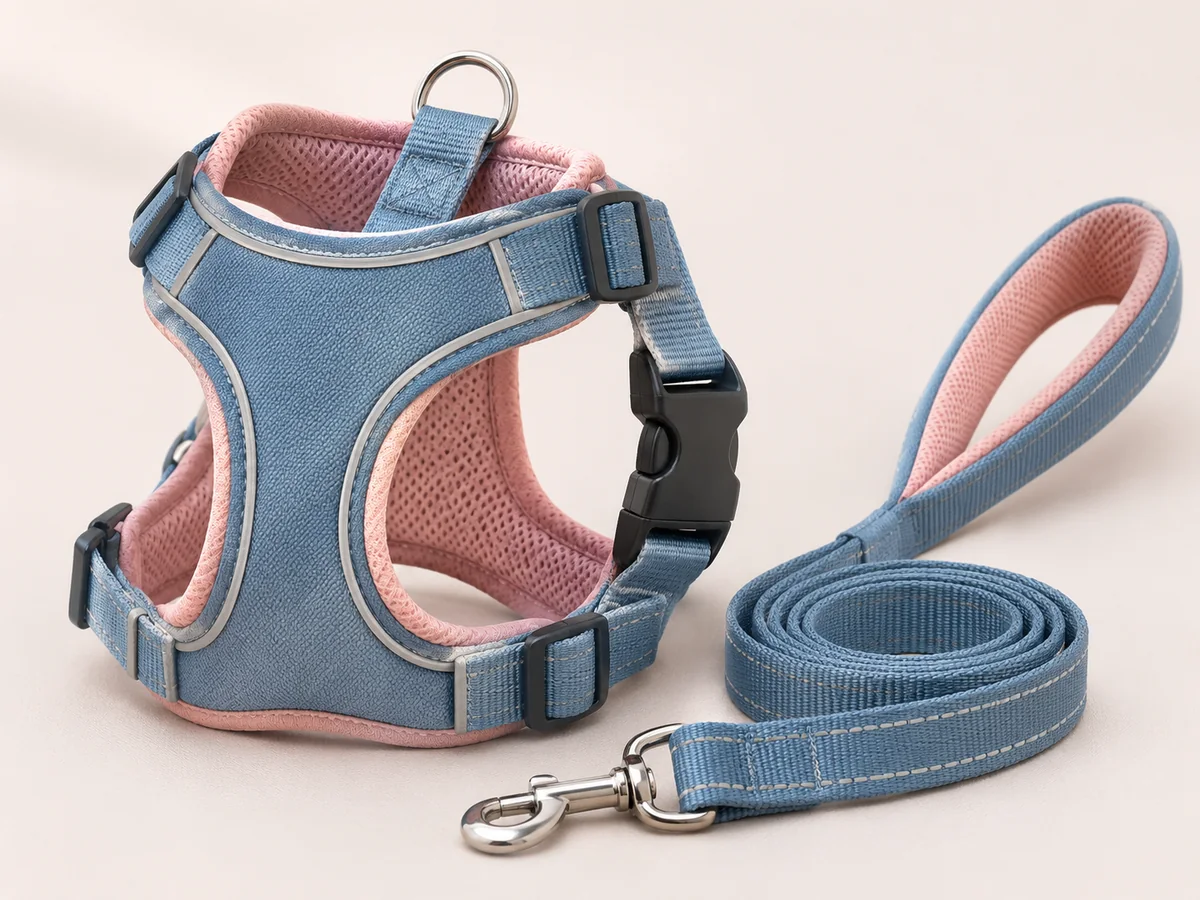
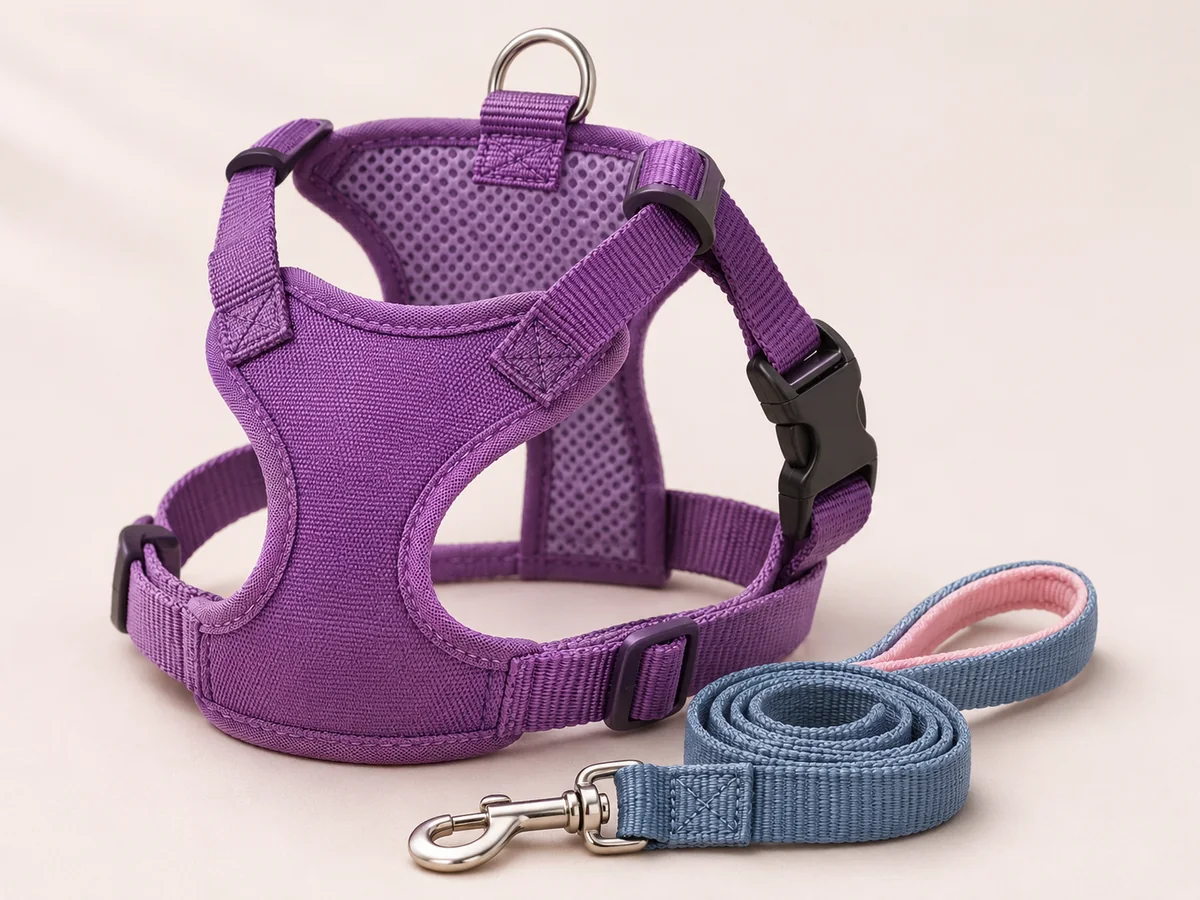
YIMEIS soft mesh harness and leash set
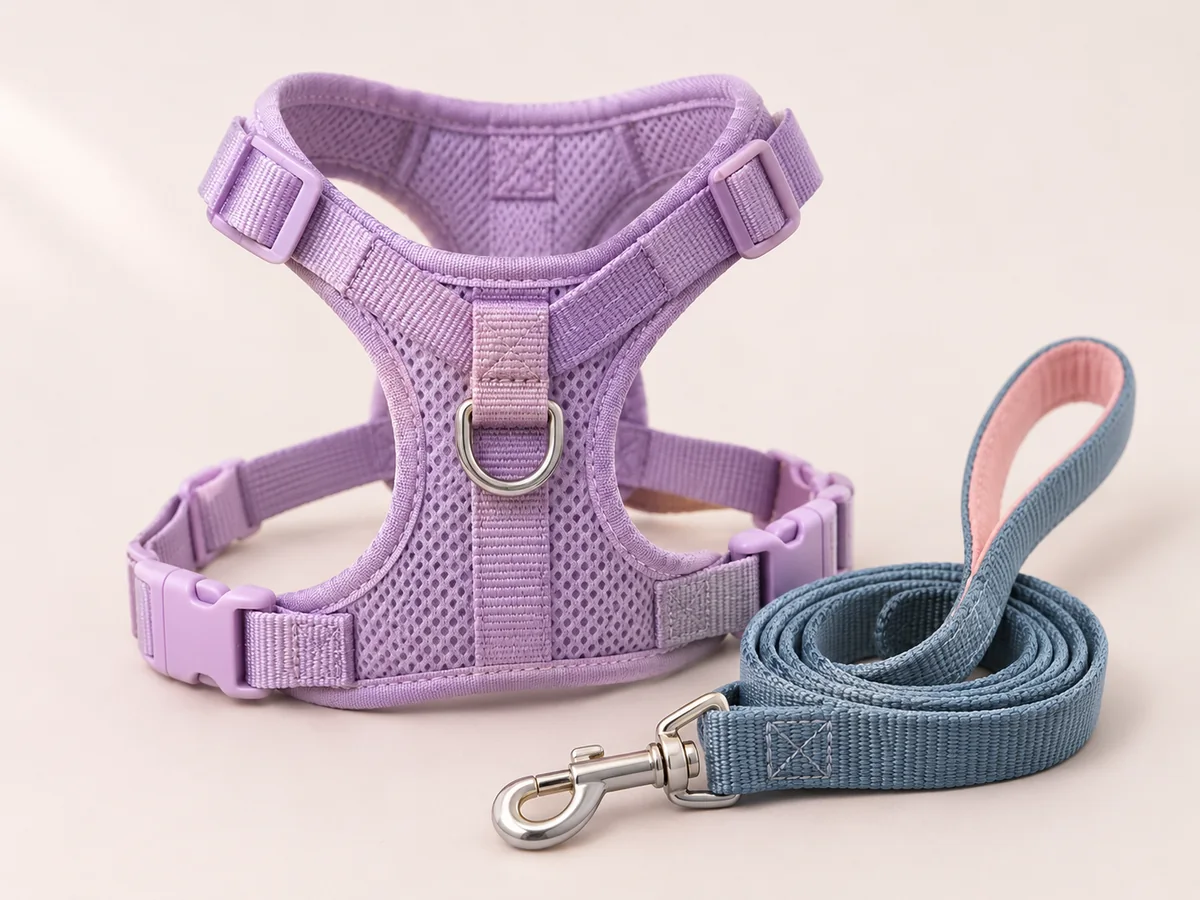
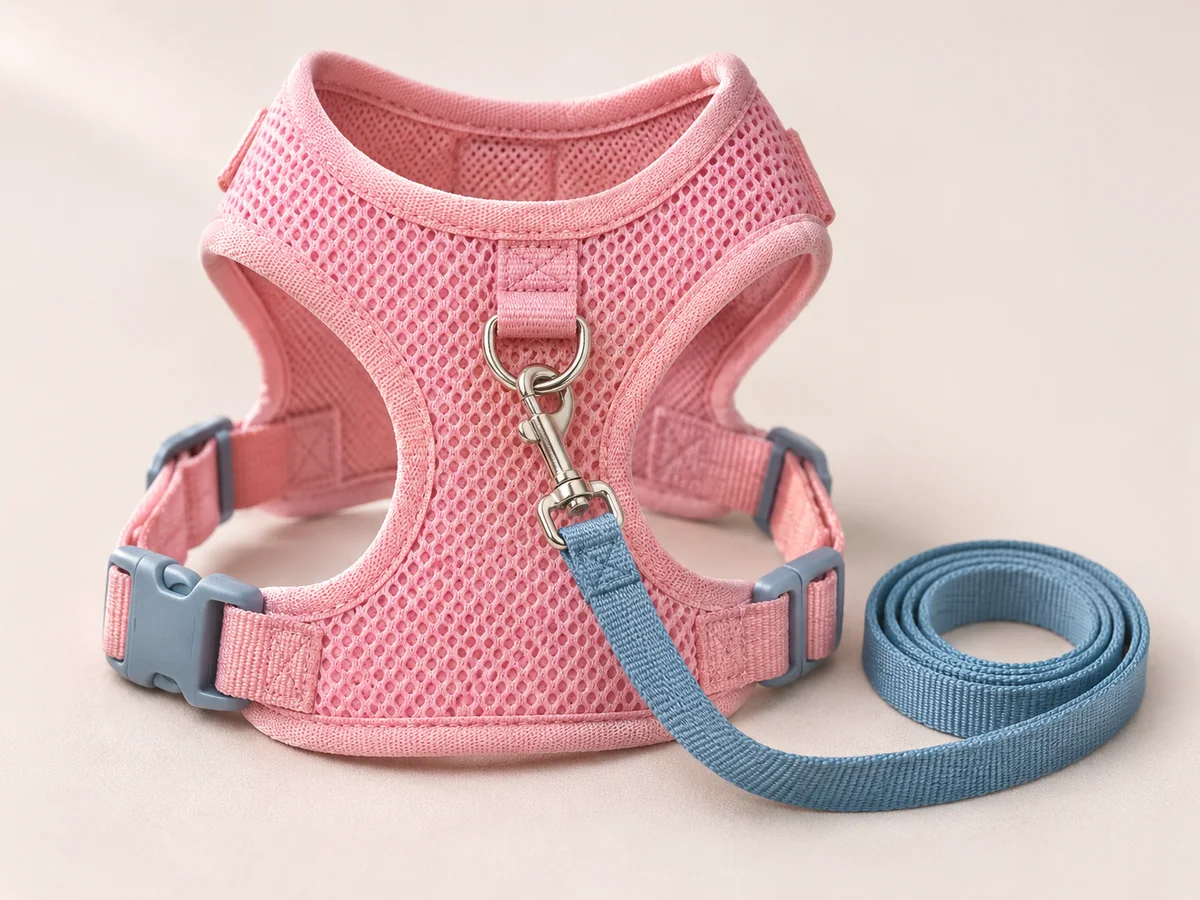
A soft mesh vest harness with a leash, in X-Small. It wraps the chest in breathable fabric, closes with a buckle on the back and has reflective stitching.
See it on AmazonRead why we picked it → - Walk & Training
Step-in soft mesh harness and leash set
A soft mesh vest the dog steps into with both front paws; you close it on the back and clip the leash. Reflective trim and a matching leash are included per the listing.
See it on AmazonRead why we picked it →





GPS collars and trackers
- Walk & Training
Tractive GPS dog tracker
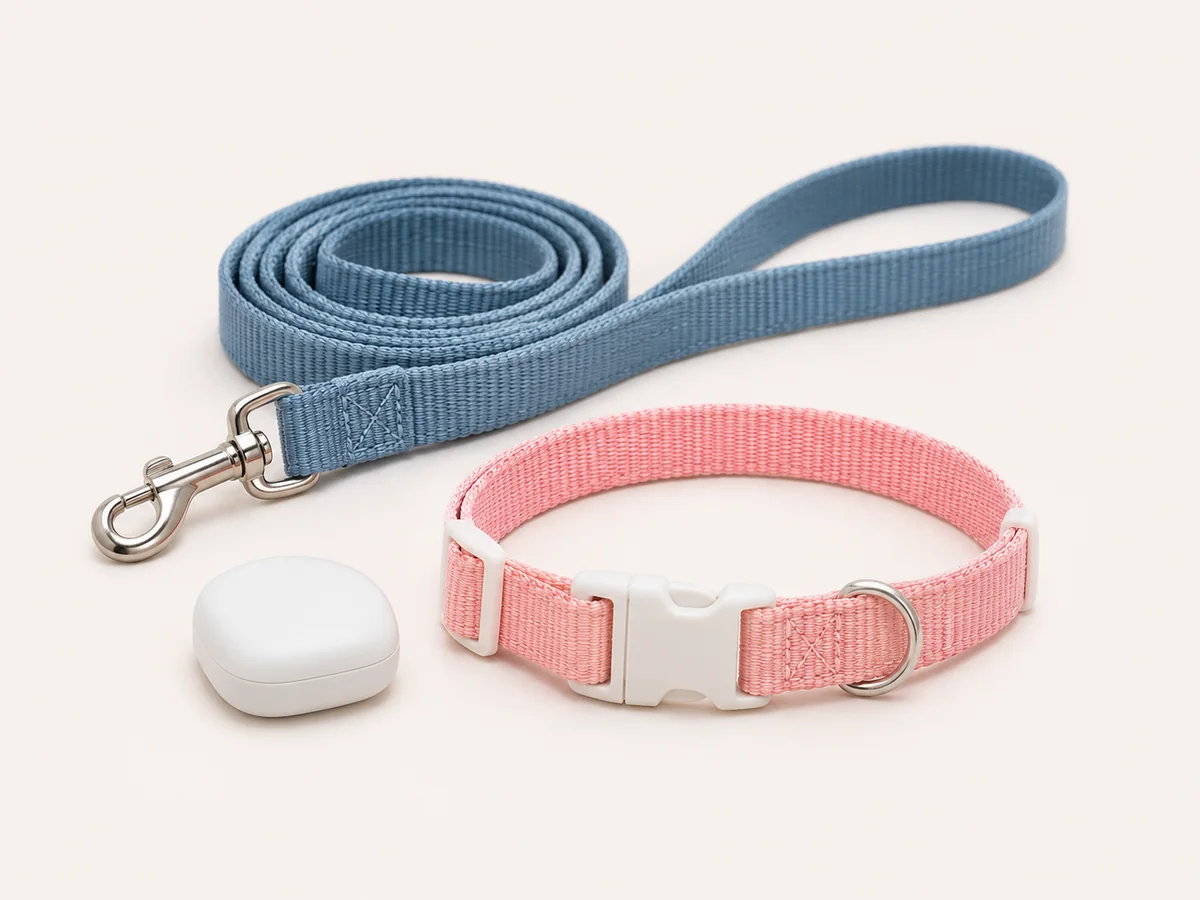
A small GPS unit that clips to the collar and shows your dog on a map in the app. It adds a virtual fence, bark monitoring and activity alerts, with a required subscription.
See it on AmazonRead why we picked it → - Walk & Training
Tractive XL GPS tracker
The big-dog version of the Tractive tracker. A larger body with a bigger battery, made for dogs over 50 pounds and for owners who want to charge less often.
See it on AmazonRead why we picked it → - Walk & Training
Fi Series 3+ smart collar
A collar with a built-in GPS module. It tracks location, steps and sleep, and the app flags behavior changes like scratching or licking, per the maker.
See it on AmazonRead why we picked it → - Walk & Training
Halo Collar virtual fence
A GPS collar that lets you draw fences on a map and gives the dog feedback when it nears the line. Tracking and training features live in the same app.
See it on AmazonRead why we picked it → - Walk & Training
Petcube GPS tracker
A small cellular tracker from Petcube that clips to the collar and shows the dog on a live map. It uses the same app family as the brand cameras.
See it on AmazonRead why we picked it → - Walk & Training
Garmin T5 dog tracking collar
A rugged tracking collar that talks by radio to a Garmin handheld unit. It works off-grid, which is the point, and it is built for working dogs in the field.
See it on AmazonRead why we picked it → - Walk & Training
No-subscription pet GPS tracker
A tracker that advertises no subscription, a free collar in the box and a long battery claim, for iOS and Android. It is a generic listing, so read the details.
See it on AmazonRead why we picked it → - Walk & Training
Apple AirTag (as a backup tag)
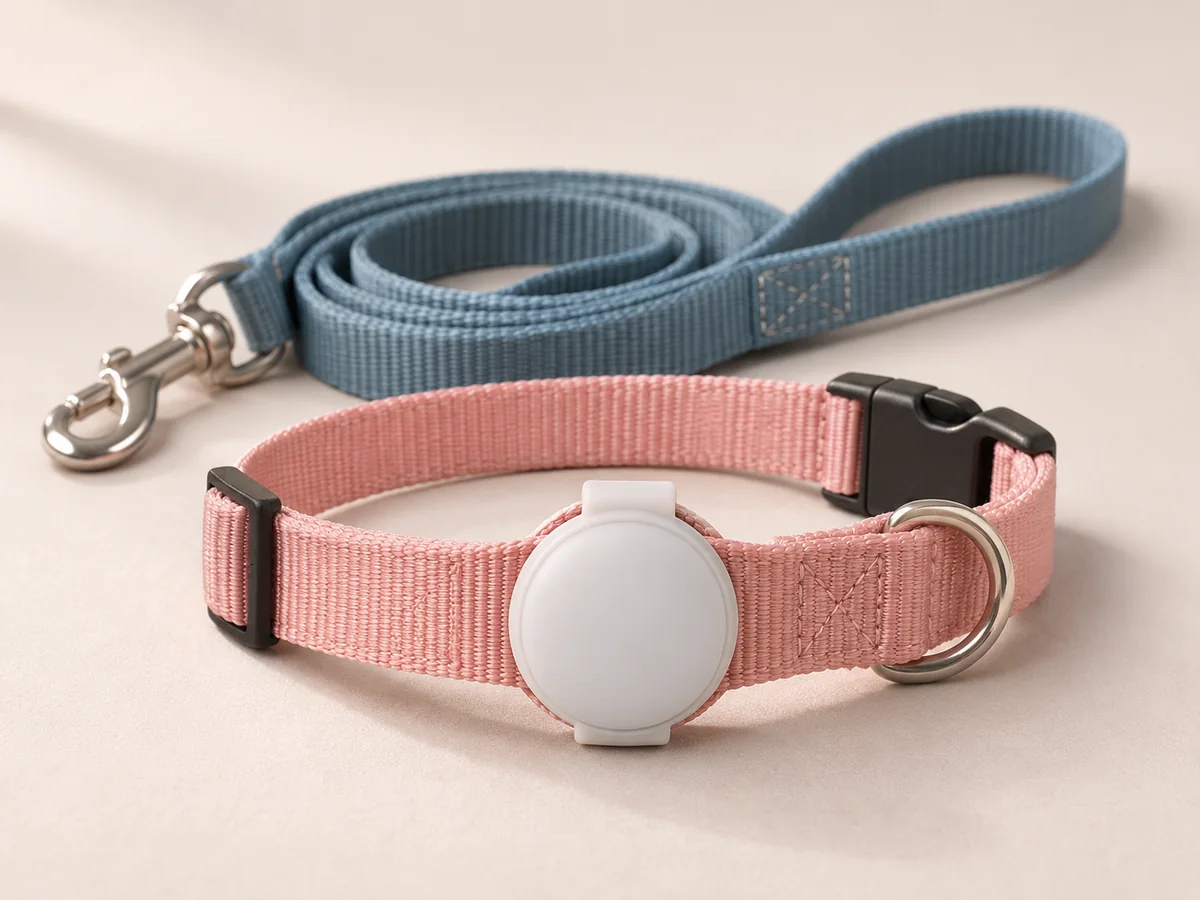
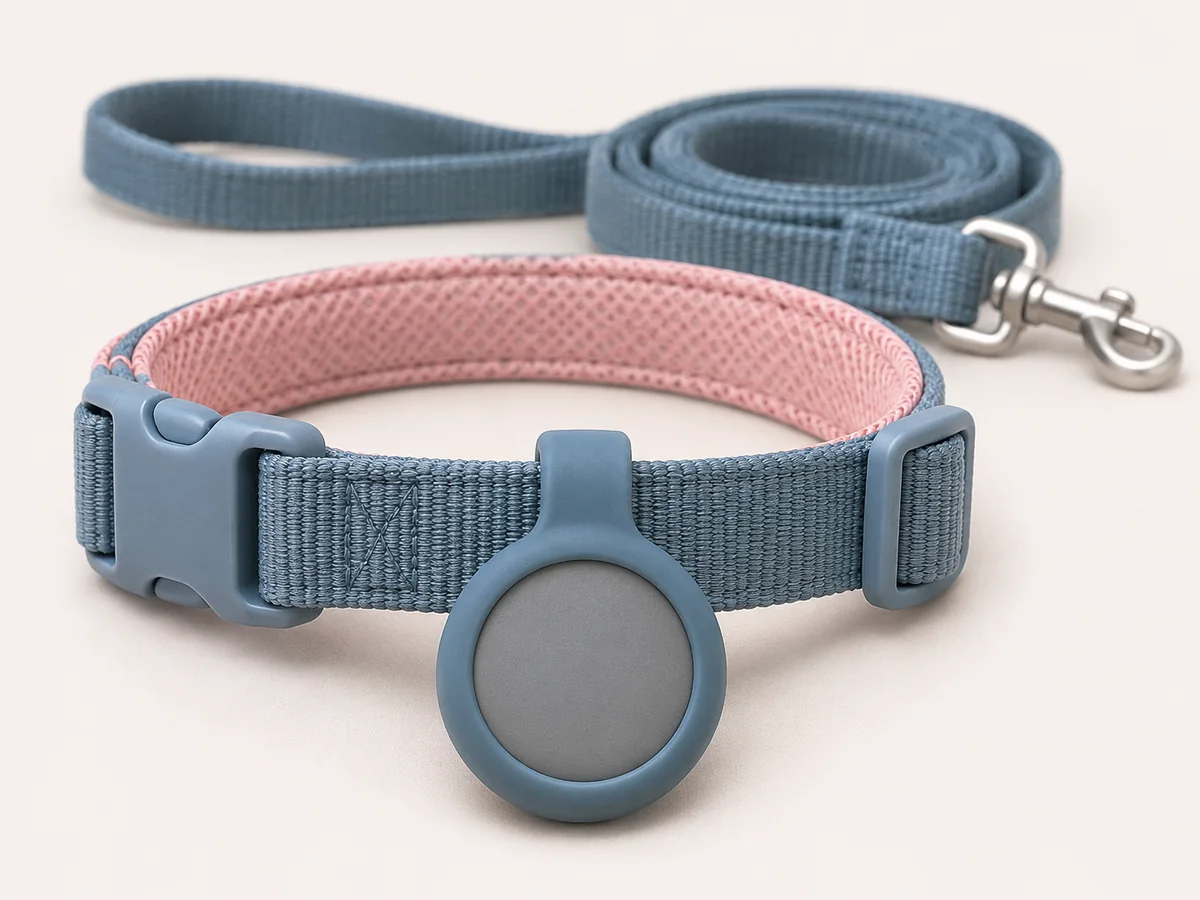
A coin-sized Bluetooth tag that reports location through nearby Apple devices on the Find My network. Useful as a backup on a collar, useless for live tracking in open country.
See it on AmazonRead why we picked it → - Walk & Training
Mini GPS tracker for dogs and cats
A compact tracker that reports position to an app and sends an alarm when the pet leaves a zone. The listing promises waterproofing and a long battery; the plan terms are the thing to read.
See it on AmazonRead why we picked it →


Guides in Walk & Training
Best No-Pull Dog Harnesses: Front-Clip, Back-Clip and How to Fit One
Front-clip harnesses that turn a lunge into a turn, a fit checklist you can do in two minutes and the training that makes "no-pull" actually mean something.
Read the guideBest GPS Dog Collars and Trackers for Escape Artists and Hikers
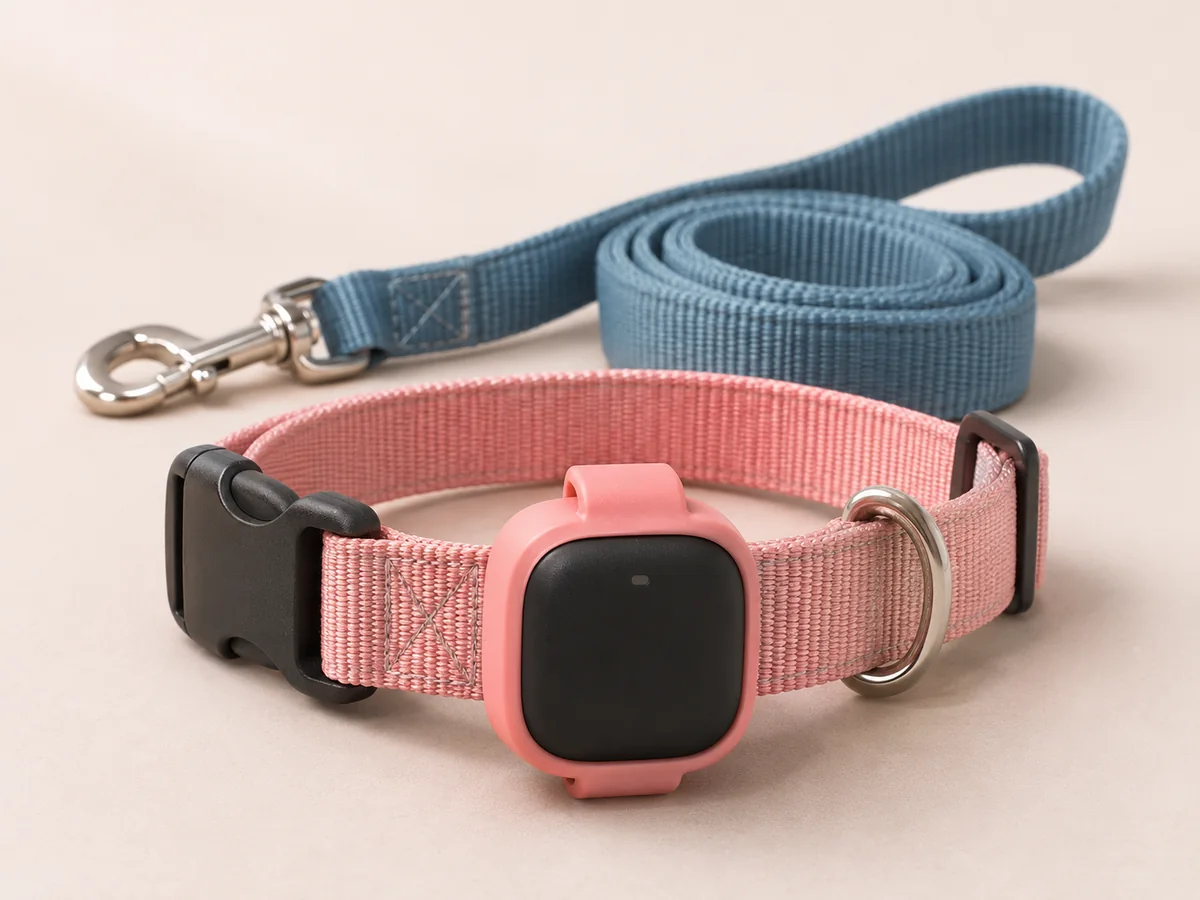
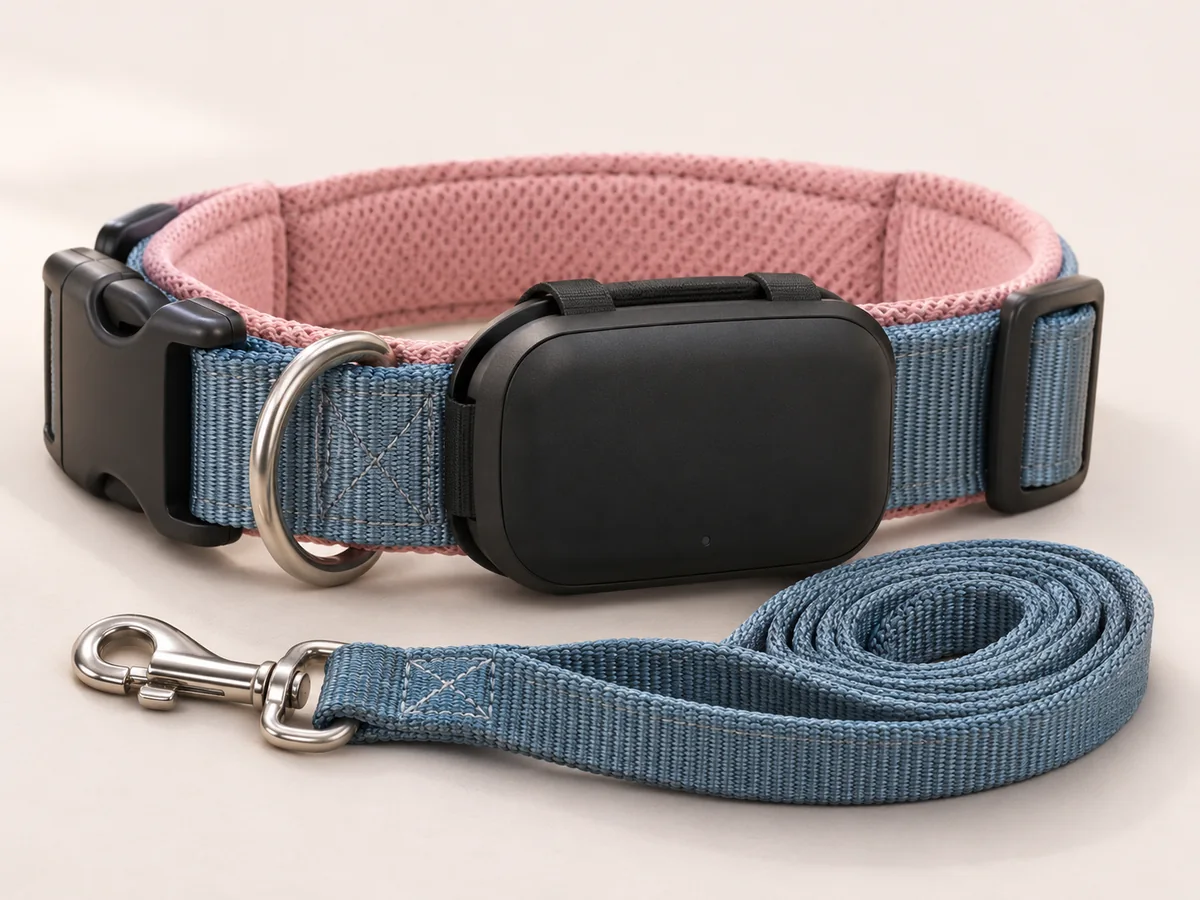
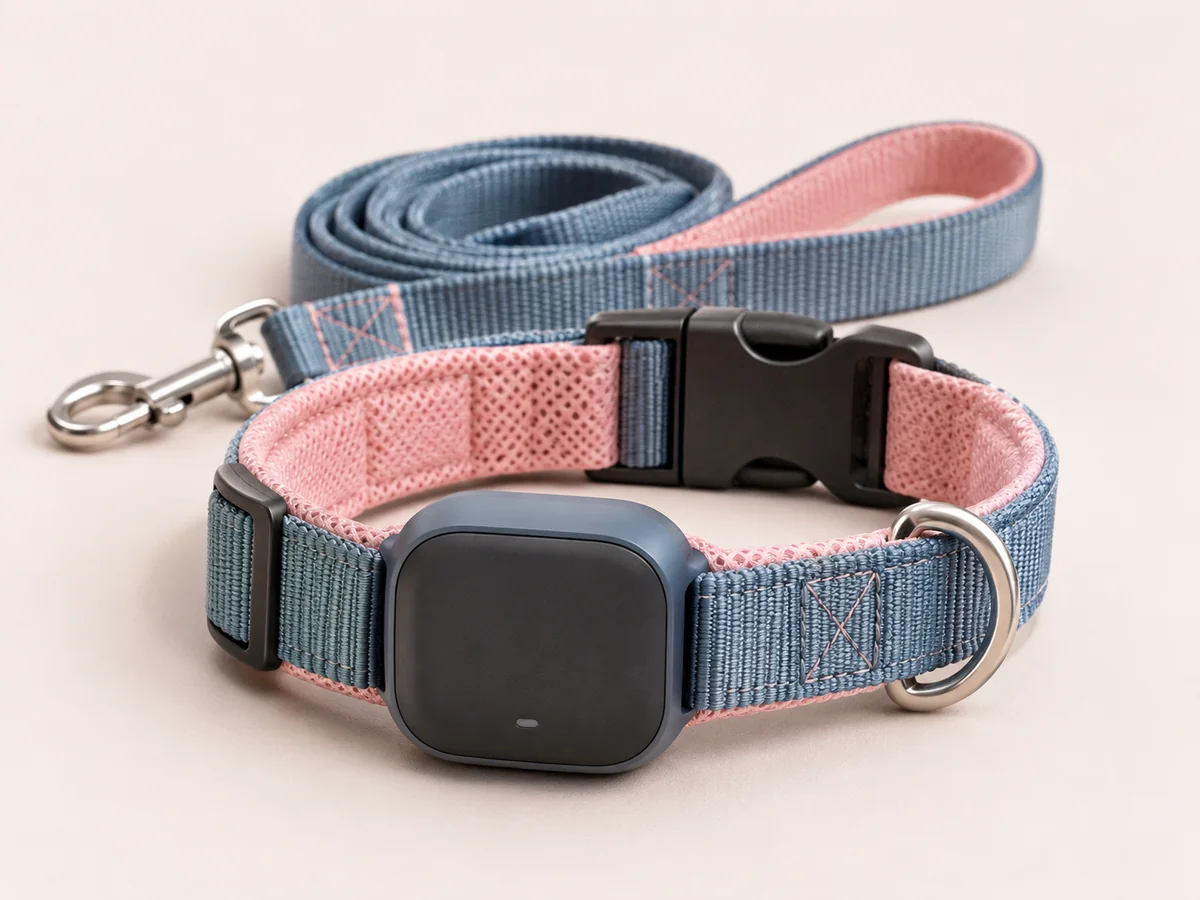
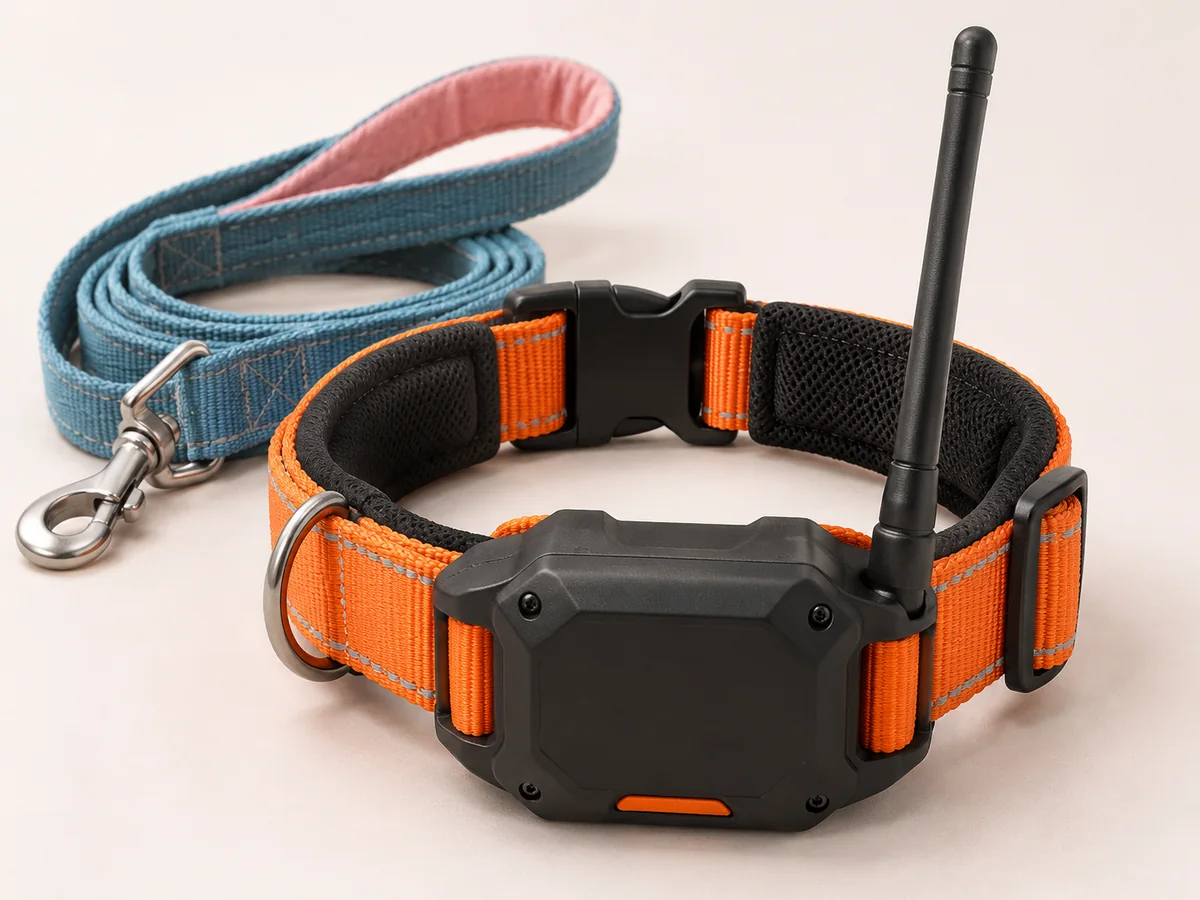
For fence-jumpers and trail dogs: the trackers we would pick, sorted by network and what you give up with each, plus a buyer's guide and setup tips.
Read the guidePuppy Crate Training Schedule: An Hour-by-Hour Plan by Age
Short cycles, calm exits and a predictable rhythm: the hour-by-hour plan for 8 to 16 week puppies, with the night strategy and the troubleshooting.
Read the guide
Frequently asked questions
Front clip or back clip?
Front clip for pullers: the leash angle steers the shoulders back toward you. Back clip for dogs that already walk politely and for puppies learning the gear. Several harnesses on this page have both rings so you can switch as training progresses.
How tight should a harness be?
Two fingers under each strap, no more. Fit it snug at the chest, walk for ten minutes, then check behind the front legs for rubbing and adjust.
Do GPS trackers need a subscription?
Most cellular trackers do, because the live map runs over a phone network. A few work without a plan using Bluetooth or local radio, with less range. Each pick says which it is and tells you to read the plan terms on the listing.
Can a harness stop pulling on its own?
No. A front-clip harness reduces pulling and gives you leverage; the lasting change comes from rewarding the loose leash, which the training guide covers.