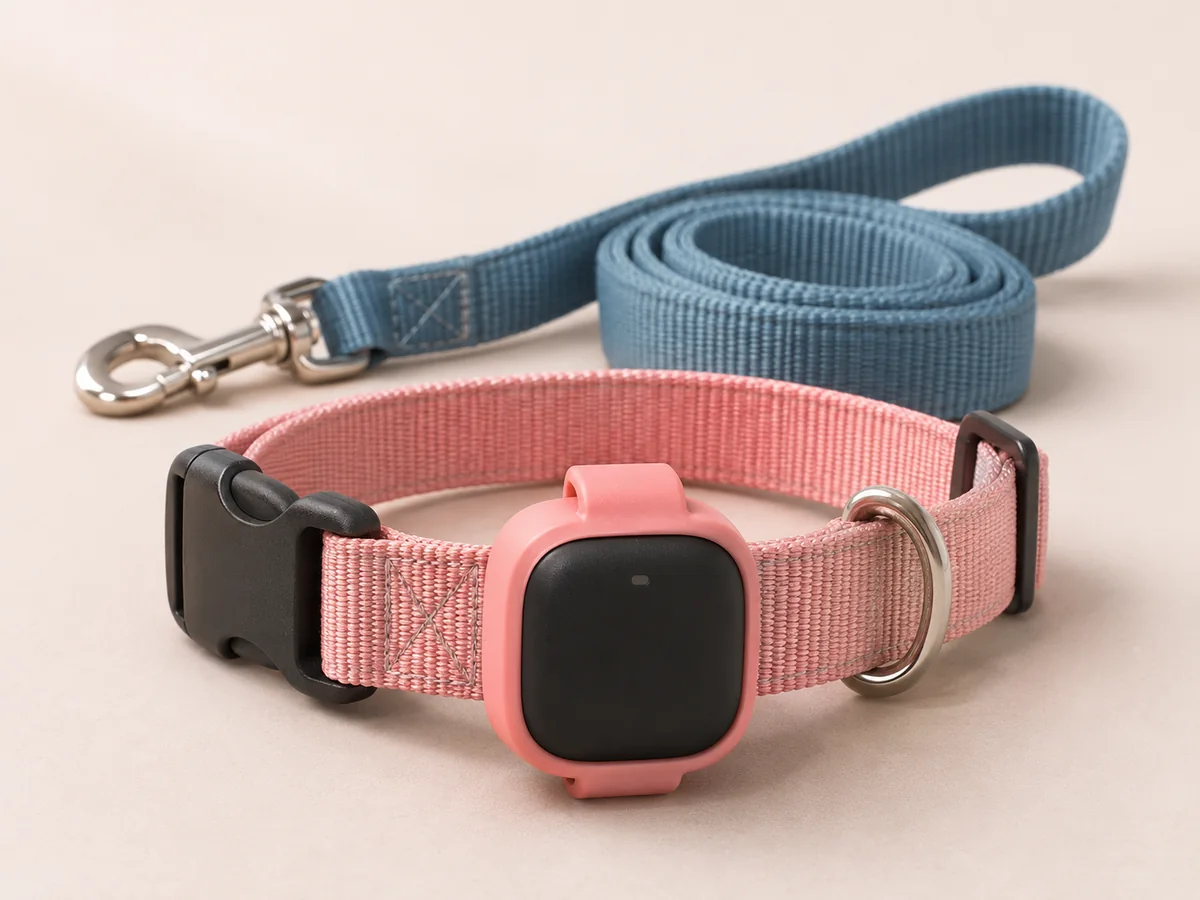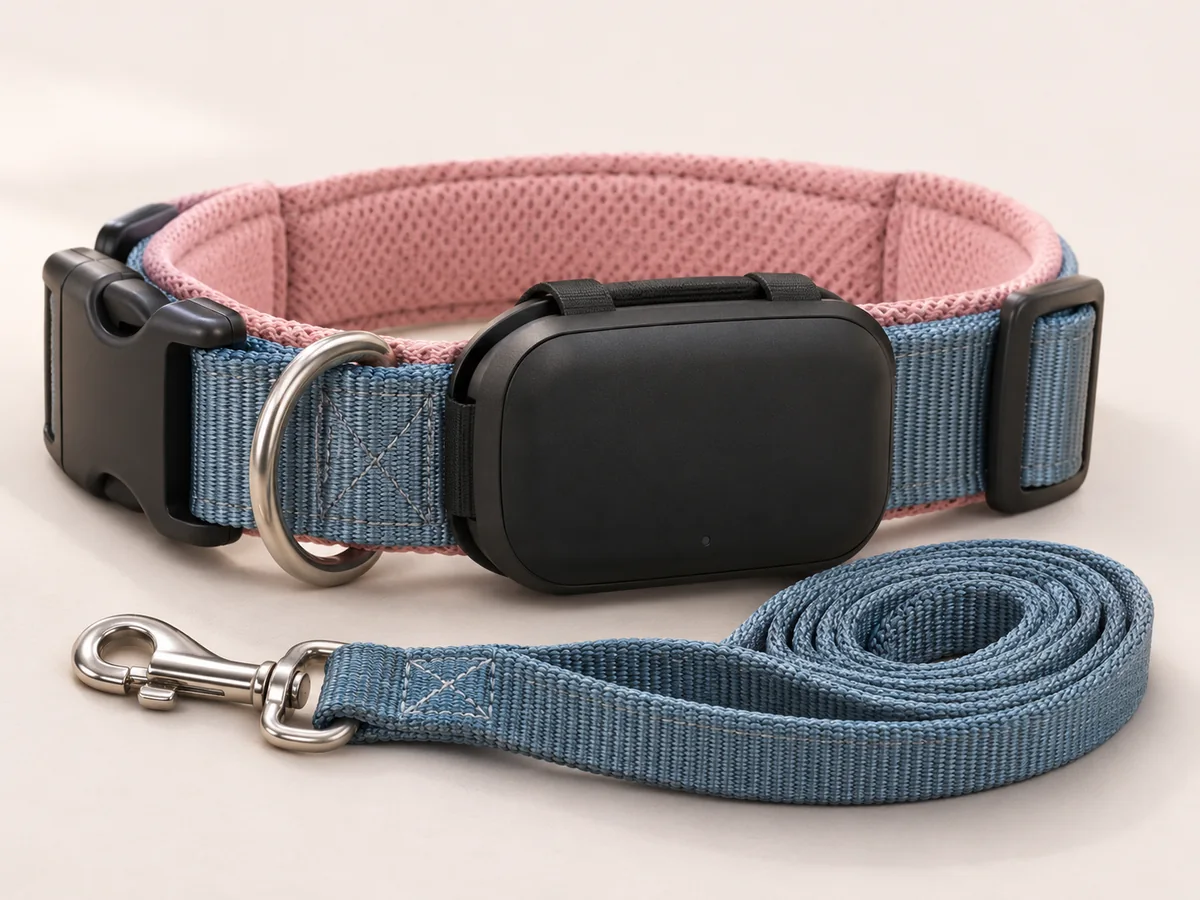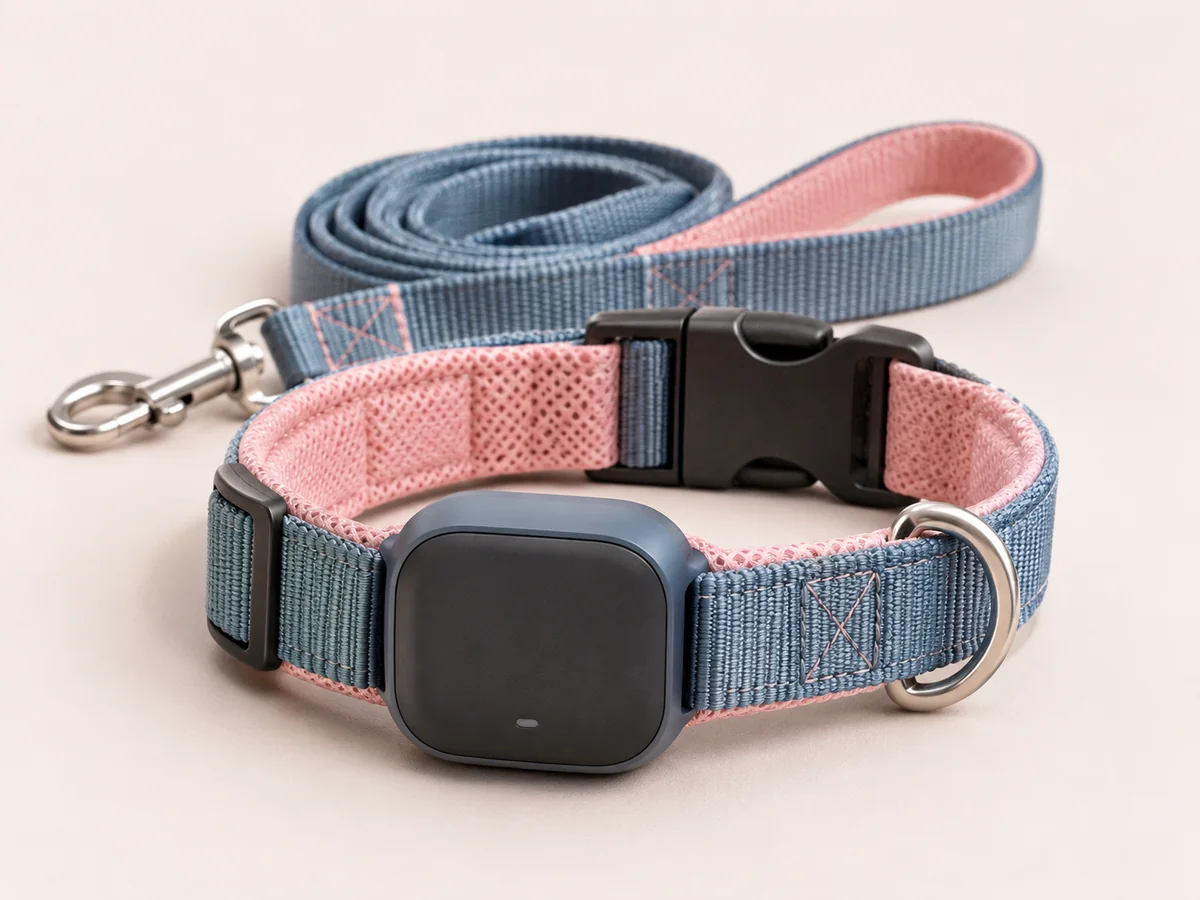
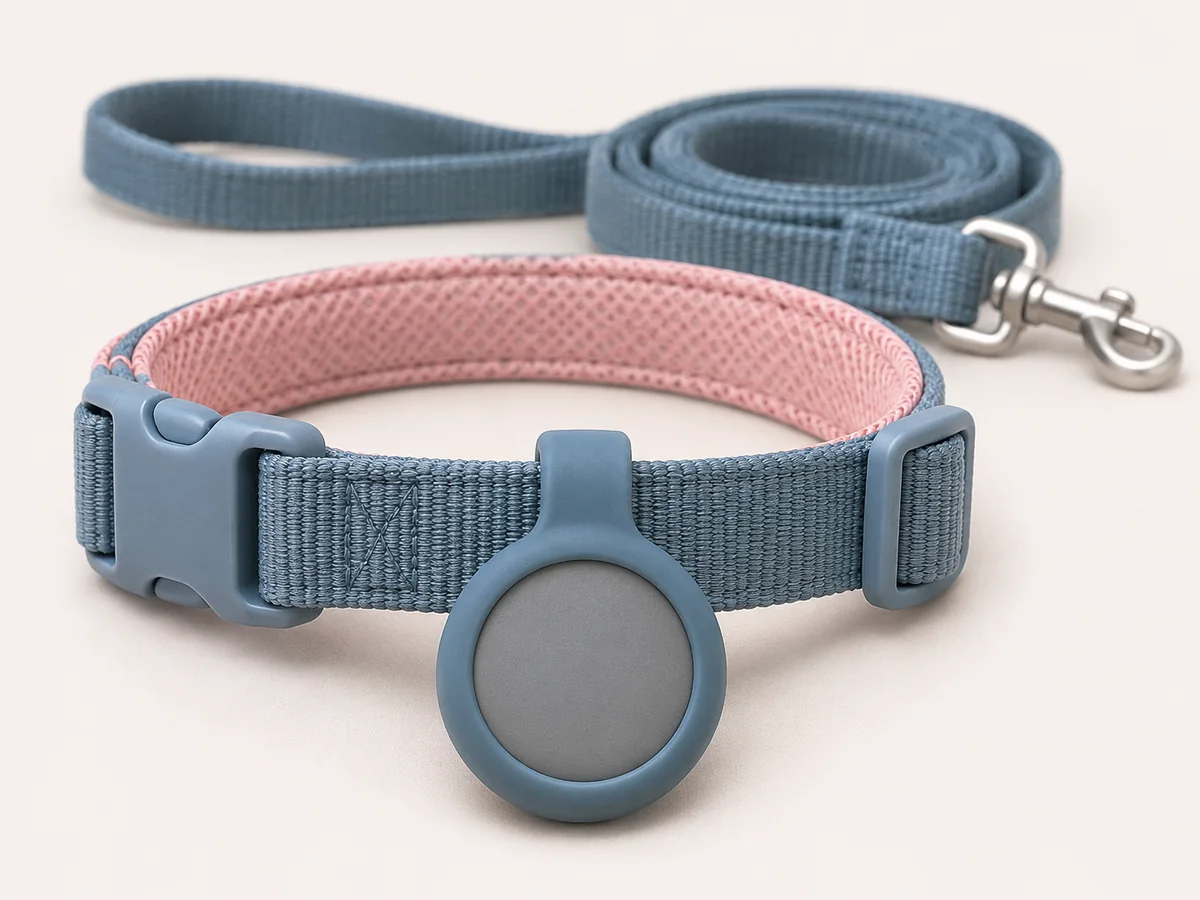
Why we picked it
An AirTag has no GPS. It sends a Bluetooth signal, and any Apple device that passes within range relays its location to you. In a city that happens constantly, so if the dog slips out and ends up on a busy street, you may get a location within minutes. It needs no subscription and the battery lasts about a year, per Apple.
We picked it only as a backup tag: a second layer behind an ID tag, for an urban dog, or as a cheap way to find a collar left at the dog park. Apple makes it for keys and luggage, and the listing says so.
The honest catch is the whole mechanism. In a park, on a trail, or in a suburb at night there may be no iPhone nearby, and then the tag is silent. It also needs an iPhone or iPad to set up and to search. For a real escape risk, a cellular GPS tracker is the tool.
Good for
- A backup on an urban dog with a real ID tag
- Finding a collar or harness left behind
- iPhone households that want zero fees
Skip it if
- Your dog bolts into open country
- You use Android
- You expect live tracking
Check on the listing
- Network
- Find My, via nearby Apple devices; no GPS
- Setup
- Requires an iPhone or iPad
- Holder
- A collar holder is sold separately
- Battery
- Replaceable coin cell; about a year per Apple
We do not test products. We pick them for how they work, for what the listing says and for who they suit. Sizes, materials and plans change: check the listing before you buy.