Jack Store blog · Walk & Training
How to Stop Your Dog Pulling on the Leash (Without Yanking)
Last updated:
As an Amazon Associate we earn from qualifying purchases.
How to stop your dog pulling on the leash comes down to one rule: pulling never moves the walk forward, and a loose leash always does. The moment the leash goes tight, stop and plant your feet. When it hangs slack again and your dog looks back, reward at your side and walk on. That is the American Kennel Club (AKC) method, and it needs no yanking, no special collar and no raised voice.
It is simple, not quick. Below: why dogs pull, the setup, the method step by step, a table for the moments it falls apart, the evidence on leash corrections, and where a harness or head collar fits in.
In this guide
- Why dogs pull on the leash
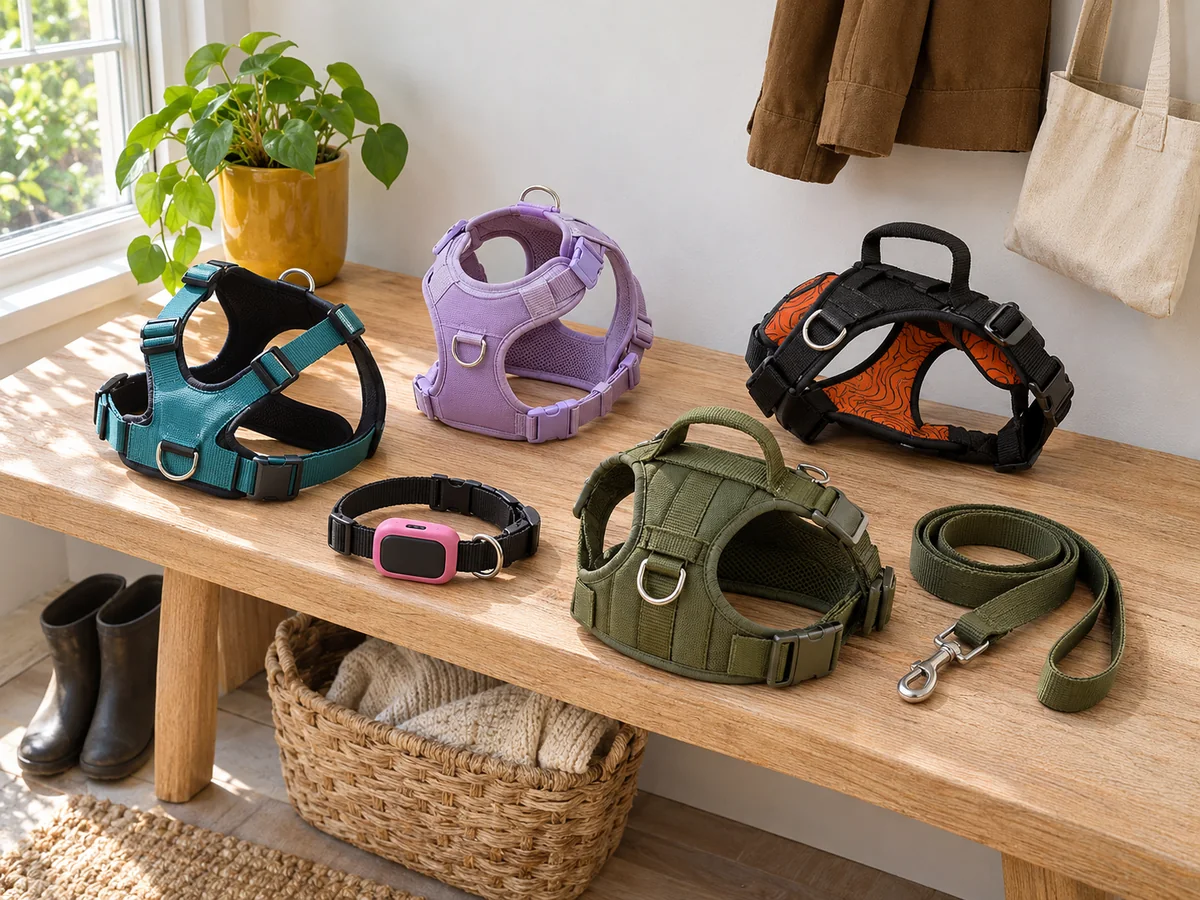
- Set up first: leash, harness and treats
- The stop-and-wait method, step by step
- What to do when it falls apart: the situation table
- Why not just yank the leash? What the evidence says
- Harness, head collar or flat collar: what gear can and cannot do
- Sniff time and exercise: the half that is not training
- How long it takes, and when to get help
- The honest catch
- Frequently asked questions
Why dogs pull on the leash
Dogs pull because it works. The AKC puts it plainly: your dog wants to walk, so if you keep walking while the leash is tight, you are handing over the very reward the dog is pulling for. Dogs repeat what gets rewarded, and every tight-leash step forward is a payment. The fix is to change what gets paid.
Speed is part of it. The AKC notes that most of the time humans walk at far too leisurely a pace for dogs. Some dogs come with a head start: a handout from the UC Davis veterinary school’s behavior service notes that sled, working and tracking breeds were bred to pull, and names lack of proper training as the most common cause.
Set up first: leash, harness and treats
Three things make the method easier before you take a step. First, the leash. The AKC’s leash-training guide says to avoid retractable leashes and use a lightweight 6-foot leash instead. A fixed length makes it clear where the slack ends.
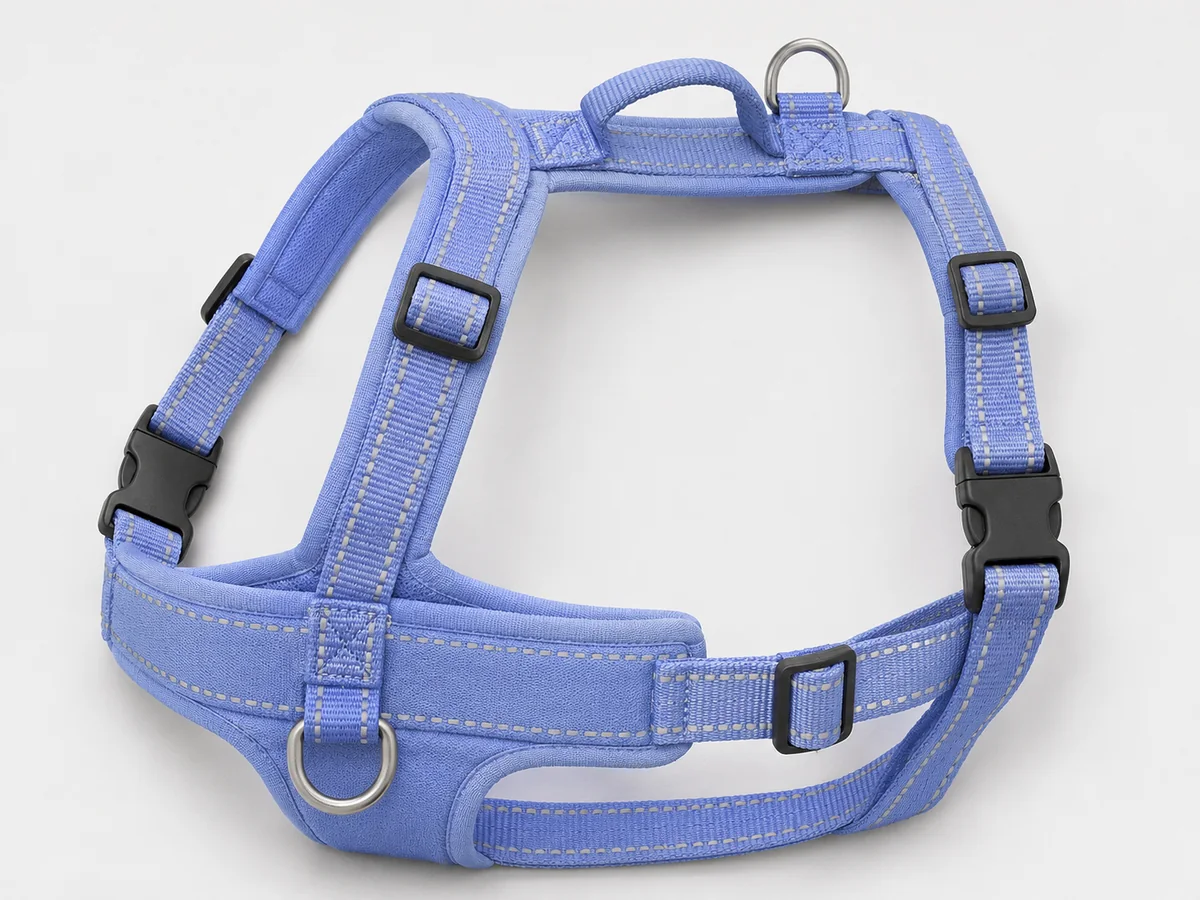
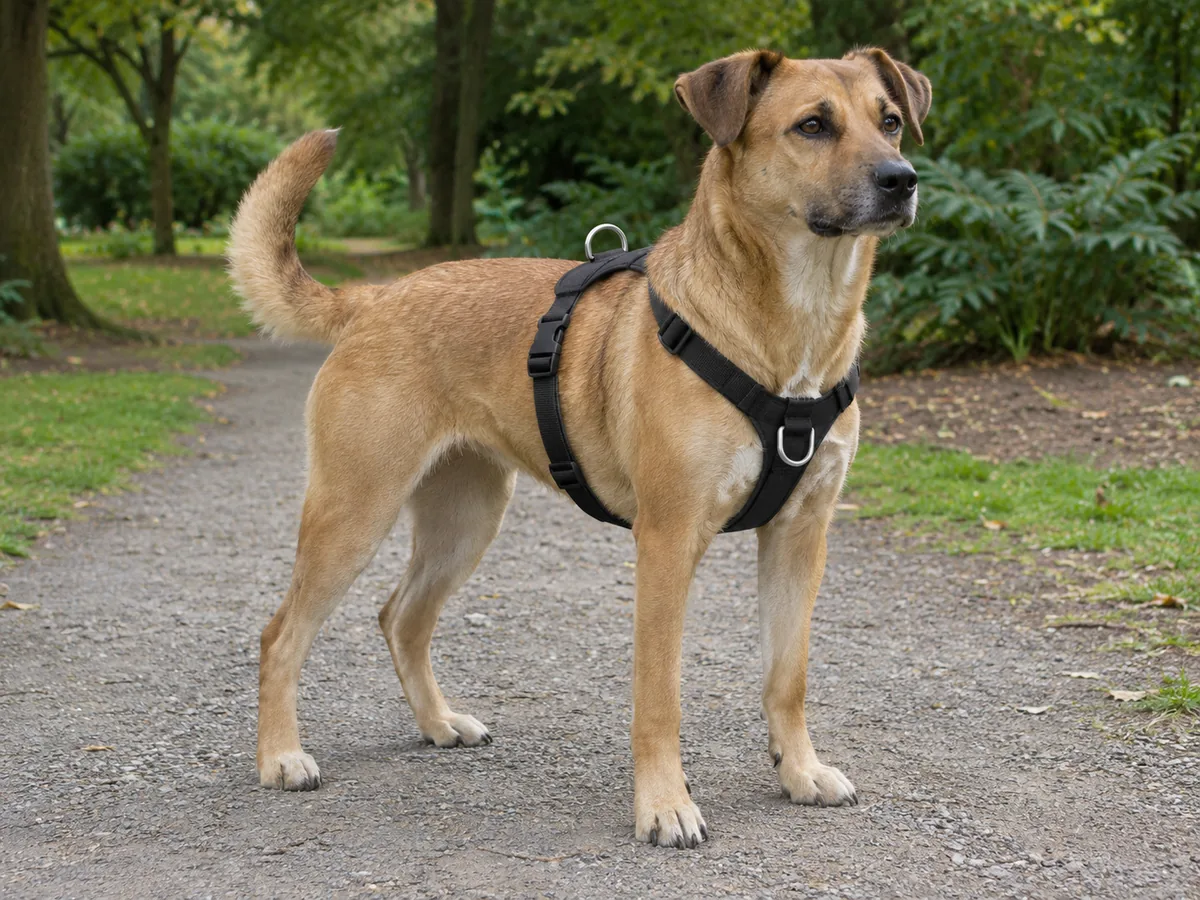
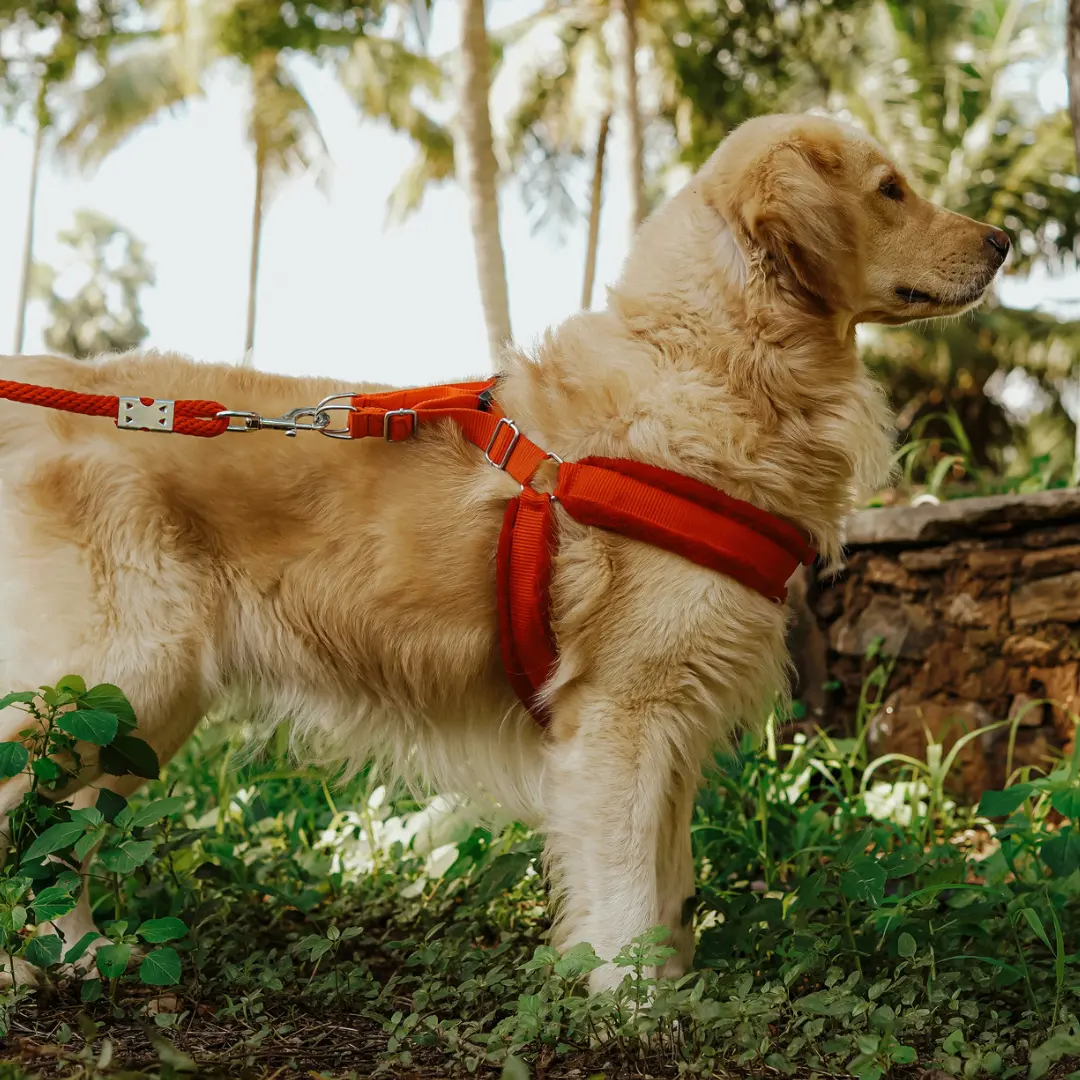
Second, where the leash clips. A harness keeps pressure off the neck when a dog does pull, and the AKC’s harness guide says a front attachment helps redirect a pulling dog’s movement and may discourage pulling. Our front-clip vs back-clip harness comparison covers which ring to use, how to measure your dog for a harness covers the size, and the models we would pick are in our no-pull harness guide.
Third, the pay. The AKC suggests lots of small treats your dog is excited about. One that breaks into tiny pieces, such as the freeze-dried liver treats in our catalog, lets you pay twenty times without serving a second dinner. Pick a marker too: a clicker, or a short word like “yes”.
The stop-and-wait method, step by step
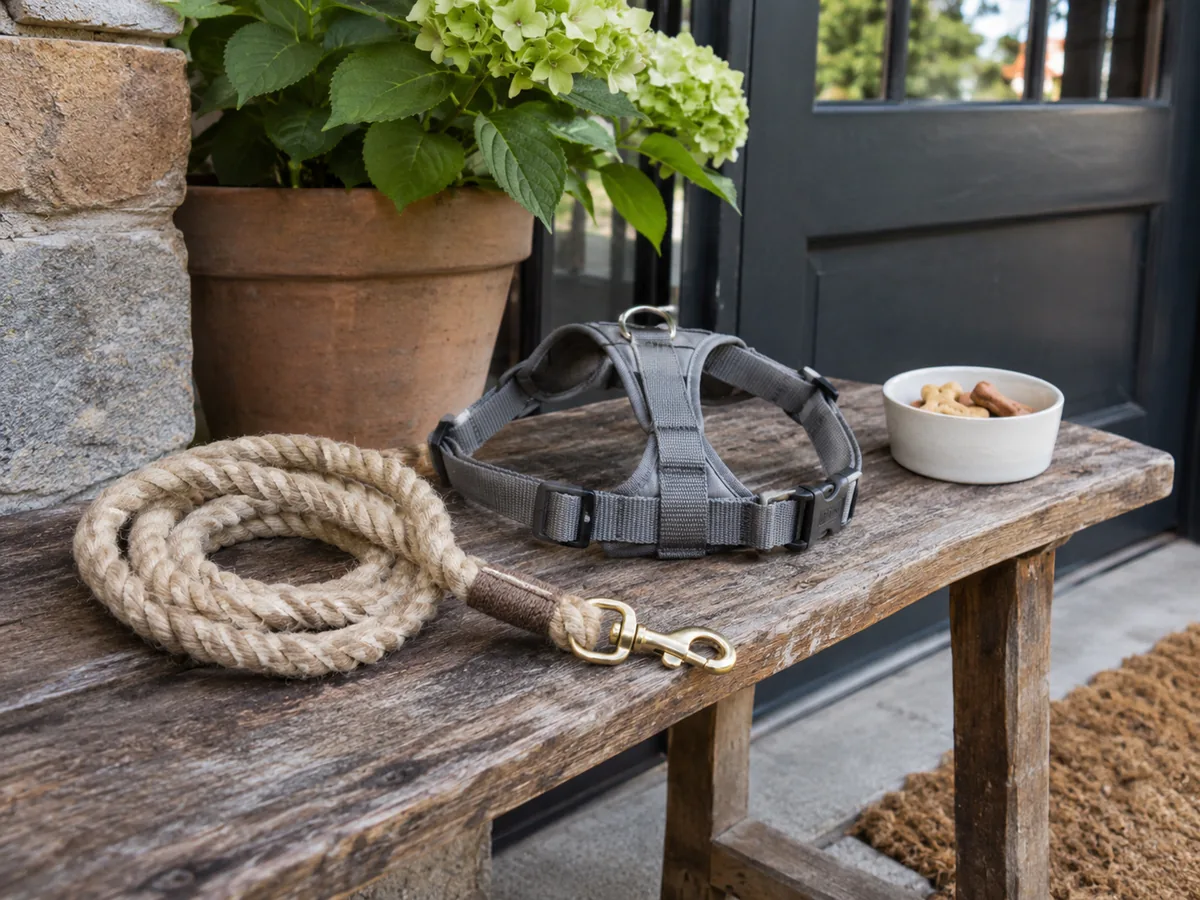
Start where nothing interesting is happening: a hallway, the yard, an empty driveway. The UC Davis handout sets the first goal at two steps next to you, then a treat. Build from there with the AKC’s loose-leash rules, in the order listed below.
Keep sessions short and upbeat, as the AKC advises. The planning figure in our harness guide is three to five minutes; that number is ours, not a clinical one. In the beginning, the AKC says, you might get no further than the end of your driveway.
- Say your walking cue (the AKC suggests “let’s go” or “with me”) and step off.
- Mark and treat every few steps while the leash is loose. Deliver the treat at your side, so that is where the dog wants to be.
- The instant the leash goes tight, stop and plant your feet. No tug, no scolding.
- Wait. The AKC’s test is a slack leash hanging in a J shape and a dog that has turned its attention back to you.
- Praise, treat at your side and walk on. Moving forward is part of the reward.
- Repeat. The AKC warns you may have to stop and start every step or two at first.
- Add life rewards once a few houses go well: after 10 feet without pulling, the AKC suggests releasing the dog to sniff for a few minutes.
What to do when it falls apart: the situation table
One rule, a dozen exceptions. Each row pairs a common breakdown with the response its source recommends; putting them side by side is ours.
| Situation | What to do | Source |
|---|---|---|
| Pulls from the first step out the door | Stop, plant your feet and wait for the J-shaped leash, every step or two if needed | AKC |
| Drags you toward a tree, a hydrant or a smell | Stop. When the leash is slack, release the dog to sniff as the reward | AKC |
| Hits the end of the leash and keeps going | Say the dog’s name, mark the look back, reward when it returns, then move again | AKC, trainer Michele Miller |
| Surges out in front again and again | Turn and walk the other way; reward once you feel slack | UC Davis |
| Another dog or a squirrel is coming | Get the dog’s attention before it notices: a treat, a sit, a hand target or a “watch me” cue | AKC |
| You are late and have no time to train | Skip the walk: a potty trip in the yard or at the curb, and train when you have time | AKC |
| Puppy grabs and tugs the leash | Treat for attention, say “drop”, reward when the leash comes out, then hold it with less slack | AKC |
| Dog is stronger than the person walking it | A front-clip harness or a properly fitted head collar, used to steer and never to yank | AKC, Humane World for Animals |
| Pulling comes with fear, anxiety or aggression | Have a veterinary behaviorist assess the dog before you train leash manners | UC Davis |
Why not just yank the leash? What the evidence says
Because it is not needed, and it has costs. The American Veterinary Society of Animal Behavior (AVSAB) states in its position statement on humane dog training that there is no evidence that aversive training is necessary for dog training or behavior modification, and that reward-based methods have been shown to be more effective than aversive ones. Its list of things a trainer should avoid names leash jerking and physical force, along with tools that involve pain: choke chains, prong collars and electronic shock collars.
On the cost side, AVSAB cites survey studies that associate aversive methods with long-term behavior problems, including aggressive behavior toward people and other dogs, with its own caveat that surveys cannot separate causation from correlation. Humane World for Animals is blunter about the hardware. It says choke chains can injure the trachea and esophagus and are unnecessary, and that aversive collars may suppress a behavior without teaching the dog what the proper behavior is.
Reward-based does not mean anything goes. AVSAB says dogs learn best with structure, routine and guidelines, taught without fear, intimidation or pain. Stopping every time the leash tightens is a boundary that does not hurt.
The sources differ on one point. The UC Davis handout, written by veterinary students, teaches a mix of positive and negative reinforcement and describes the turn-around with a pull back only strong enough to get the dog’s attention. AVSAB’s avoid list includes leash jerking. We follow AVSAB: turn your body and let the leash follow, with no pop.
Harness, head collar or flat collar: what gear can and cannot do
Gear changes the physics, not the habit. The UC Davis tool chart gives front-attachment harnesses one advantage (the chest attachment decreases pulling) and one plain disadvantage: some dogs still pull. Its summary covers this whole section: tools are just that, tools, and dogs also need training to walk well on a leash.
For a strong dog, Humane World describes the head collar as good for energetic dogs who may jump or pull, because with the strap around the muzzle the dog cannot pull with the full weight of its body. Two conditions come attached: it must be properly fitted, and it is meant to steer gently, not to be used in a jerking or yanking fashion. Expect to spend time and treats getting the dog used to it.
A flat collar is fine for ID tags and for a dog that already walks on a loose leash. For a dog still learning, the AKC’s leash-training guide calls a harness generally the better option for puppies, since there is no pressure on the neck if they pull. Our picks and their fit notes are on the Walk and Training page.
Sniff time and exercise: the half that is not training
Trainer Michele Miller, quoted by the AKC, makes a point that sounds backward: if you want a puppy to pull less, give it more chances to sniff and choose where it walks. Her advice is to go somewhere several times a week where the dog can just sniff and go wherever it wants.
So split your outings in two. On training walks, the rule holds from door to door. On sniff walks, the dog sets the route and the pace.
Timing helps too. UC Davis advises training after the dog has had sufficient exercise, not as a substitute for it, and the AKC notes that a quicker pace can make it easier for a dog to learn not to pull.
How long it takes, and when to get help
None of the sources above gives a number of weeks, and neither will we. What the AKC does give is the mechanism: any time you allow your dog to pull, you set the training back to square one. That makes consistency the real schedule. Our reading: everyone who holds the leash follows the rule on every walk, or the dog learns that pulling pays sometimes.
Getting help early is not failure. The AKC says there is no need to wait until you are struggling and frustrated to work with a trainer. Pick one the way AVSAB tells veterinarians to pick: certified, humane and effective, and not someone who reaches for a choke chain, a prong collar or a shock collar.
Frequently asked questions
How long does it take to stop a dog pulling on the leash?
No source we rely on gives a timeline. The AKC says early sessions may not get past the end of the driveway and that you may have to stop every step or two at first. Consistency sets the pace: each walk where pulling works sets the training back.
Is a harness or a collar better for a dog that pulls?
A harness. It keeps pressure off the neck, and the AKC says a front attachment helps redirect a pulling dog’s movement and may discourage pulling. It is a tool, not training: the UC Davis handout notes that some dogs still pull in one. Keep the flat collar for ID tags.
Should I use a prong or choke collar to stop pulling?
No. AVSAB’s position statement lists choke chains, prong collars and shock collars among the tools a trainer should avoid, and says there is no evidence that aversive training is necessary. Humane World for Animals warns that choke chains can injure the trachea and esophagus.
Does letting my dog sniff on walks make pulling worse?
Not if the sniff is earned on a slack leash. The AKC recommends sniffing as a life reward, for example after 10 feet without pulling, and trainer Michele Miller advises regular outings where the dog chooses the route. Dragging you to the smell is what should never work.

Sources
- AKC: How to Stop Your Dog From Pulling on Leash
- AKC: Leash Training, How to Train a Dog or Puppy to Walk on a Leash
- AKC: Best Dog Harnesses, Types, Fit Tips and Safety Guide
- AVSAB: Position Statement on Humane Dog Training (2021, PDF)
- Humane World for Animals: Which Type of Dog Collar Is Best for Your Dog?
- UC Davis Veterinary Medicine, Clinical Animal Behavior Service: Loose Leash Walking (handout, PDF)
Nothing on this site is veterinary advice. Health claims belong to the manufacturer; your vet knows your dog.

By Jack ReyesJack Reyes writes and edits the guides and picks on jackstore.fun, and reads the fine print on dog gear so you do not have to: how a thing works, who it is for and who should skip it. Jack Reyes does not test products and never quotes prices. The other Jack, the Maltipoo on our logo, is the site mascot.
Keep reading
 Best no-pull dog harnesses, and how to fit oneGuide
- Walk and Training: the picks and the guidesCategory
- Front-clip vs back-clip harness: which one to useGuide
- How to measure your dog for a harnessGuide
- Puppy potty training: schedules, signals and common mistakesGuide
 The Big Dog Starter Checklist, freeFree checklist